


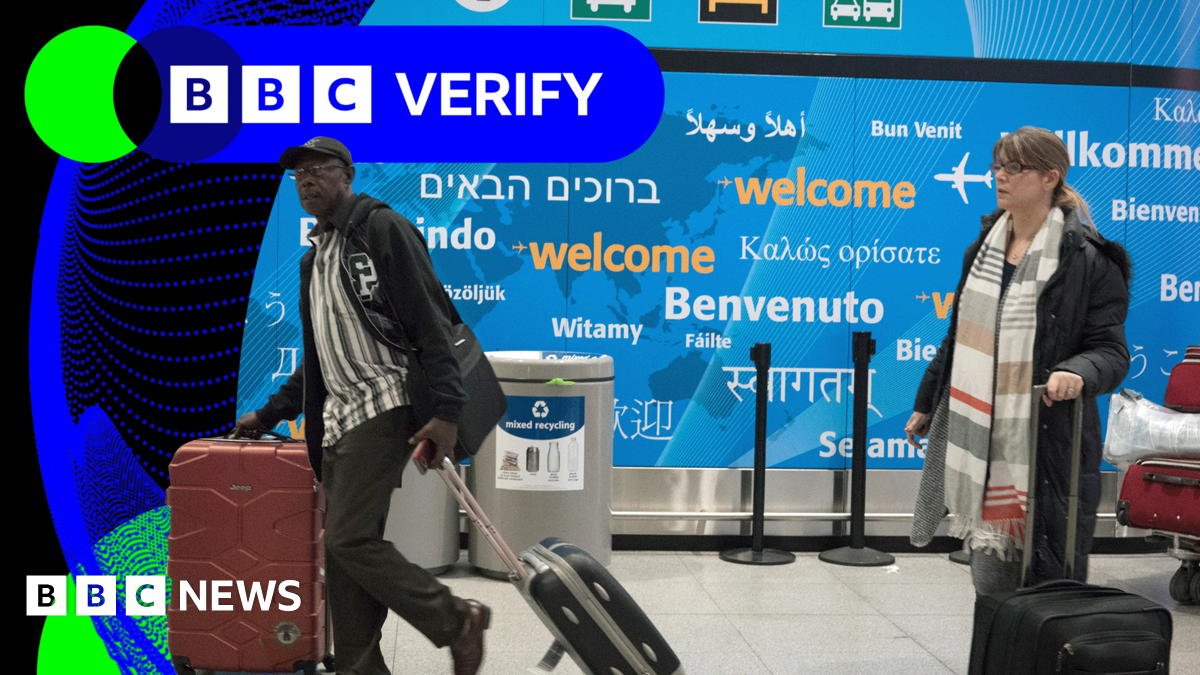
Trump’s Expanded Travel Ban Sparks Scrutiny and Controversy
Former President Donald Trump has reinstated and broadened his controversial travel ban, restricting entry to the United States from 19 countries. This executive order, signed shortly after he regained office, has ignited a firestorm of debate and raised serious questions about its rationale and potential impact. Critics argue that the ban unfairly targets specific nations, primarily based on unfounded security concerns and neglecting factual data on visa overstays. The administration’s justification centers on protecting national security by preventing individuals who might pose a threat from entering the country. However, a closer examination of the listed countries reveals inconsistencies and raises concerns about the true motivation behind the ban.
The White House has cited visa overstay rates as a primary reason for including most of the countries on the list. Yet, a comparison of overstay data reveals a stark disconnect between the administration’s stated rationale and the reality on the ground. Several countries with significantly higher overstay rates than those on the banned list remain unaffected by the restrictions. This discrepancy calls into question the legitimacy of using overstays as the primary justification for the ban and suggests other factors, potentially political or discriminatory in nature, may be at play.
A striking example of this inconsistency lies in the case of Chad, a nation included on the banned list, which had a relatively low number of visa overstayers in 2023. Conversely, Colombia, with a substantially higher number of overstays in the same period, is exempt from the travel ban. This disparity underscores the apparent arbitrariness of the criteria used to select the targeted countries. Similar discrepancies can be found with other nations, further highlighting the lack of clear correlation between actual overstay rates and inclusion on the banned list.
The administration has offered additional justifications for the ban, citing concerns about inadequate screening and vetting procedures in some of the targeted countries. Trump, in a video address, invoked the recent Boulder, Colorado shooting, perpetrated by an Egyptian national, as evidence of the need for stricter vetting of foreign nationals. However, Egypt is notably absent from the list of banned countries, casting further doubt on the consistency and logic behind the administration’s reasoning. The suspect in the Boulder attack had entered the US legally on a tourist visa and subsequently applied for asylum. This incident highlights the complex challenges of immigration control and the importance of addressing root causes of violence rather than implementing broad, discriminatory measures.
The expanded travel ban has faced widespread condemnation from civil rights groups, legal experts, and members of the international community. They argue that the ban is discriminatory, ineffective, and ultimately undermines American values. The lack of clear evidence linking the targeted countries to actual security threats, coupled with the inconsistencies in the administration’s justifications, has fueled accusations of prejudice and a hidden agenda. Critics contend that the ban unfairly targets individuals from specific regions based on their nationality or religion, rather than on any demonstrable threat they pose.
The legal challenges to the travel ban are already mounting, with several lawsuits filed arguing that it violates constitutional principles of due process and equal protection. The courts will ultimately decide the legality and fate of the ban, but the controversy surrounding it underscores the deep divisions within American society over immigration policy and national security. The ban’s impact on families, businesses, and international relations remains to be seen, but its implementation marks a significant shift in US immigration policy, one that is likely to have far-reaching consequences.