


UN Official Accuses Israel of ‘Forced Starvation’ in Gaza, Sparking Controversy and Renewed Debate Over Aid Distribution
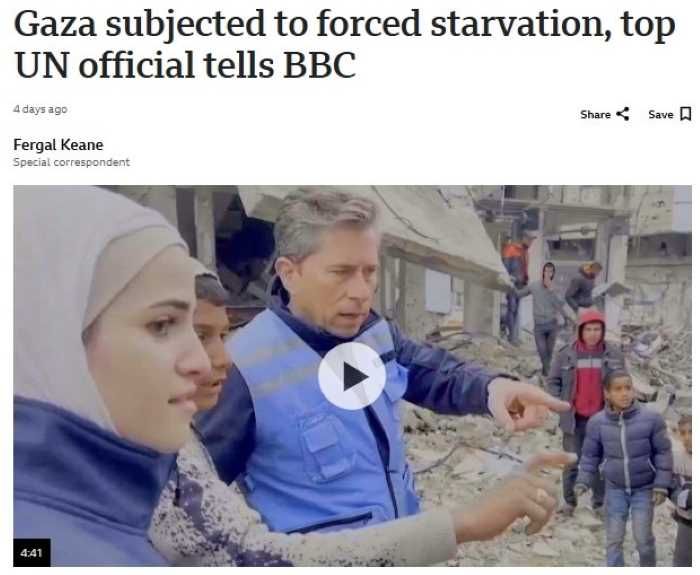
The humanitarian crisis in Gaza has once again taken center stage, with a senior UN official accusing Israel of "forced starvation" and sparking a heated debate over aid delivery and accountability. Tom Fletcher, Under-Secretary-General for Humanitarian Affairs and Emergency Relief Coordinator, made the accusations during an interview with BBC correspondent Fergal Keane, claiming that Israel is withholding vital aid from the besieged territory, leading to widespread suffering. This comes amidst ongoing conflict and a complex political landscape that has hampered humanitarian efforts for over 19 months.
Fletcher’s contentious interview with the BBC, which aired on May 30th, 2025, further fueled the existing controversy surrounding aid distribution in Gaza. He asserted that Israeli ministers have openly expressed their desire to relocate the population of Gaza, a move he equated to "ethnic cleansing." Fletcher also reiterated the UN’s position that Israel’s proposed aid distribution plan, which bypasses the UN, is unacceptable, labeling it a “cynical sideshow” and a “deliberate distraction.” He emphasized the UN’s commitment to ensuring aid reaches civilians, not Hamas, echoing criticism of Israel’s claims that Hamas diverts aid.
The BBC’s handling of the interview, however, has drawn criticism for its lack of impartiality and failure to provide crucial context. Keane’s questioning seemed to reinforce Fletcher’s narrative, with leading questions about "ethnic cleansing" and "war crimes." The BBC’s reporting also omitted key information about the substantial amounts of aid entering Gaza, including nearly 1.8 million tons since the start of the war and over 950 truckloads in the ten days preceding the interview. This omission created the impression of a complete blockade, neglecting to acknowledge Israel’s facilitated entry of humanitarian supplies.
The controversy surrounding Fletcher’s statements extends beyond the BBC interview. He faced criticism for previously claiming that 14,000 babies would die in 48 hours due to the blockade, a claim later retracted by the UN. While Fletcher expressed regret for the phrasing, he maintained that children remain at risk, although he failed to clarify the timeframe and the nature of the risk, which was primarily malnutrition based on a hypothetical scenario of continued aid blockage.
The core issue at hand is the mechanism for aid delivery. Israel insists on a system that bypasses the UN, citing concerns about Hamas diverting aid, a claim Fletcher downplayed in the interview. The UN, on the other hand, argues that its involvement is crucial for ensuring aid reaches those most in need. Fletcher’s interview frames the Israeli approach as a “bargaining chip,” accusing them of deliberately obstructing aid. Meanwhile, Israel points to the significant amounts of aid already delivered as proof of its commitment to addressing the humanitarian crisis.
The ongoing conflict, now spanning 601 days, has created a deeply entrenched humanitarian crisis in Gaza, exacerbated by the challenges of aid distribution. While the UN and Israel engage in a war of words, the civilian population continues to suffer. The back-and-forth accusations and counter-accusations, amplified by media coverage, add another layer of complexity to an already dire situation. It remains to be seen how this impasse will be resolved and what measures will be taken to ensure effective and impartial aid delivery to the people of Gaza. What is clear is that a sustainable solution requires a commitment from all parties to prioritize the well-being of civilians caught in the crossfire.