


The BBC’s Misleading Narrative on Gaza Aid: A Persistent Pattern of Misinformation
The British Broadcasting Corporation (BBC), a globally recognized news organization, has come under scrutiny for its repeated dissemination of inaccurate information regarding the amount of food aid entering the Gaza Strip prior to the Hamas attacks on October 7, 2023. Despite previous corrections and clarifications, the BBC continues to propagate the misleading claim that 500 trucks of aid were entering Gaza daily, failing to distinguish between total aid and actual food supplies. This misrepresentation inflates the perceived volume of food aid and obscures the reality of the situation on the ground. Data from the Coordination of Government Activities in the Territories (COGAT) and the United Nations reveals that only an average of 70 trucks per day carried food, a stark contrast to the BBC’s inflated figures.
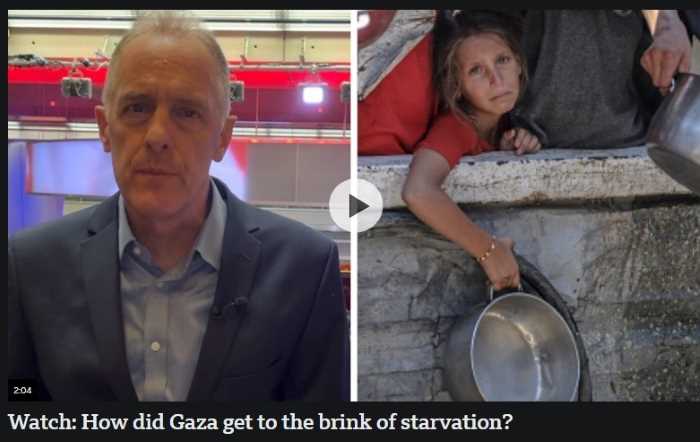
This persistent inaccuracy was most recently evident in a July 29th report by BBC Diplomatic Correspondent Paul Adams titled “Watch: How did Gaza get to the brink of starvation?”. Adams’ report stated that 650 lorries, a figure 30% higher than previously reported, entered Gaza daily, carrying a mixture of aid and commercial goods. Crucially, the report omitted the crucial detail that only a fraction of these trucks actually carried food. This omission, in a piece specifically designed to explain the impending starvation crisis, misleads viewers about the pre-existing food security situation in Gaza. By not clearly delineating the proportion of food aid within the overall aid flow, the BBC creates a distorted picture of the humanitarian landscape before the Hamas attacks.
Furthermore, Adams’ report neglects to address the political complexities surrounding the sustained refugee status of Gazans, a status that perpetuates their reliance on aid. Despite two decades of Palestinian rule following Israel’s 2005 disengagement, the report omits this crucial context, presenting a simplified narrative that overlooks the political dimensions of the aid dynamic. This lack of contextualization prevents a comprehensive understanding of the factors contributing to Gaza’s food insecurity. The report also contradicts previous BBC articles published just days earlier, which cited a USAID report and senior Israeli military officials stating there was no evidence of systematic aid theft by Hamas.
Adding to the inconsistencies, Adams’ report mentions BBC sources inside Gaza confirming Hamas’ appropriation of aid supplies following a January ceasefire. This revelation raises questions about the BBC’s previous reporting, which prominently featured Hamas’ denials of aid theft and cited reports refuting such claims. The absence of stand-alone reporting on Hamas’ alleged aid appropriation, despite the BBC possessing corroborating sources, further fuels concerns about the corporation’s editorial choices and commitment to balanced reporting. This discrepancy between internal knowledge and public reporting underscores the need for greater transparency from the BBC regarding its information gathering and dissemination practices.
The BBC’s continued misrepresentation of the aid situation in Gaza raises serious concerns about its journalistic integrity and commitment to accurate reporting. The repeated promotion of inflated aid figures, even after corrections, suggests a systemic issue within the organization, potentially stemming from editorial bias or inadequate fact-checking procedures. This pattern undermines the BBC’s credibility and its role as a trusted source of information, particularly on complex and sensitive topics like the Israeli-Palestinian conflict. Accurate and nuanced reporting is crucial for informed public discourse and understanding of the humanitarian crisis in Gaza.
The implications of this misinformation extend beyond mere statistical inaccuracy. By misrepresenting the amount of food aid entering Gaza, the BBC inadvertently downplays the severity of the humanitarian situation caused by the Hamas attacks and subsequent blockade. This skewed portrayal can impact international responses and potentially hinder efforts to address the urgent needs of the Gazan population. The BBC’s responsibility as a major news outlet necessitates a thorough review of its reporting practices and a commitment to rectifying this pattern of misinformation to ensure accurate and impartial coverage of the ongoing crisis. The organization must prioritize transparency and acknowledge its errors, while also taking proactive steps to prevent similar inaccuracies in the future, thereby upholding its journalistic duty to provide truthful and comprehensive information to the public.