


Azerbaijan Denies Armenian Allegations of Shelling Haznavar Settlement
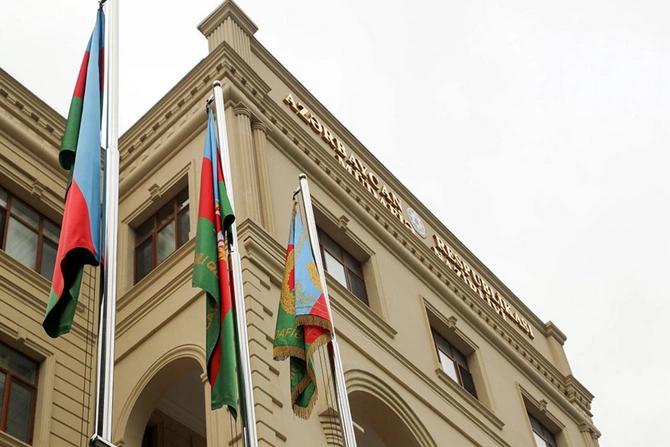
Baku, Azerbaijan – The Azerbaijani Ministry of Defense has categorically denied allegations made by the Armenian Ministry of Defense regarding the alleged shelling of the Haznavar settlement. Armenia claimed that Azerbaijani units fired upon the settlement between 1:00 am and 1:15 am on May 29, 2025, causing damage to a residential house. The Azerbaijani Ministry of Defense dismissed these claims as "disinformation" and "false information" designed to mislead the international community and create a pretext for future provocations. The ministry firmly stated that units of the Azerbaijani army never target civilians or civilian infrastructure.
This incident marks the latest in a series of accusations and counter-accusations traded between Armenia and Azerbaijan, particularly in the context of the long-standing conflict over the Nagorno-Karabakh region. Both sides have frequently accused each other of ceasefire violations and targeting civilian populations. The disputed region, internationally recognized as part of Azerbaijan, was the subject of a bloody six-week war in 2020, which ended with a Russian-brokered ceasefire agreement.
The Azerbaijani Ministry of Defense’s statement underscores the fragile nature of the peace in the region and the deep mistrust that continues to exist between the two countries. The conflicting narratives presented by Armenia and Azerbaijan highlight the challenges faced by international observers and mediators in determining the facts on the ground and preventing further escalation of tensions. The lack of independent verification mechanisms can exacerbate the information war and contribute to the spread of propaganda.
The incident also raises concerns about the potential for renewed violence in the region. The accusations and counter-accusations could fuel nationalist sentiments and create a climate conducive to further hostilities. The international community has repeatedly called on both Armenia and Azerbaijan to exercise restraint and engage in constructive dialogue to resolve their differences peacefully.
The shelling allegations come at a sensitive time for the region, as efforts to normalize relations between Armenia and Azerbaijan have been making slow progress. The two countries have held several rounds of talks mediated by Russia, the European Union, and the United States, aimed at achieving a comprehensive peace agreement. However, fundamental disagreements over the status of Nagorno-Karabakh remain a major obstacle to progress.
The international community has a crucial role to play in preventing further escalation and promoting a lasting settlement in the region. Continued diplomatic engagement, coupled with robust monitoring mechanisms and fact-finding missions, are essential to establishing the truth behind such incidents and holding those responsible accountable. Furthermore, increased efforts to foster people-to-people contacts and promote reconciliation between the two communities are vital for building trust and fostering a sustainable peace in the South Caucasus. The future stability of the region hinges on the ability of Armenia and Azerbaijan to overcome their historical grievances and engage in genuine dialogue to resolve their differences peacefully.