







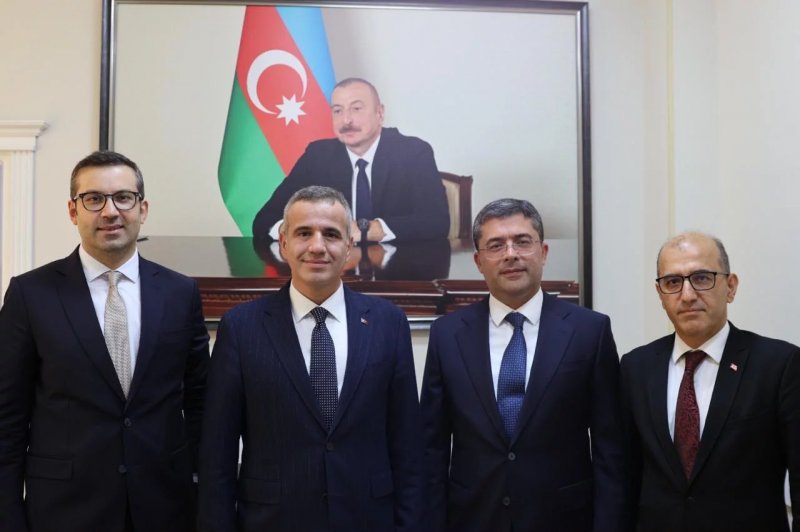
On September 14, the Media and Broadcasting Council of Azerbaijan hosted a significant working meeting with a high-level delegation from the Republic of Türkiye, led by Ferhat Pirinççi, Deputy Head of the Department of Public Relations of the Administration of the President of the Republic of Türkiye. The Azerbaijani side was headed by Ahmad Ismayilov, Chairman of the Media and Broadcasting Council. According to a report by News.Az, written by Aysel Mammadzada, the meeting focused on the current state and future prospects of cooperation between the two countries in the fields of media and communications. The gathering was not merely a routine diplomatic encounter but a reflection of the deep and strategic relationship that exists between Azerbaijan and Türkiye, a relationship often described by officials on both sides as being rooted in shared history, culture, and mutual strategic interests. In recent years, that relationship has expanded well beyond traditional political and economic cooperation to encompass areas such as defense, energy, education, and increasingly, media and digital communications. The meeting between Ismayilov and Pirinççi therefore carried symbolic and practical weight, signaling that both nations are committed to aligning their communication policies, addressing common threats and opportunities in the modern information space, and ensuring that their media environments remain resilient, professional, and capable of serving public interest.
During the meeting, Chairman Ahmad Ismayilov placed strong emphasis on the importance of the existing cooperation between Azerbaijan and Türkiye in the media and communications sector. His remarks underscored the degree to which media cooperation has become an integral pillar of the bilateral relationship, functioning alongside more traditional forms of statecraft such as diplomacy and trade. Ismayilov noted, according to the report, that there is a clear need to expand the exchange of experience between the two countries in this field. This is particularly relevant at a time when media landscapes around the world are undergoing rapid transformation, driven by technological innovation, changing audience habits, and the growing influence of digital platforms. Azerbaijan and Türkiye, as neighboring states with close historical and cultural bonds, are natural partners in navigating these changes. The exchange of experience can include everything from regulatory practices and media legislation to journalism training, editorial standards, and the development of public service broadcasting. By learning from one another’s successes and challenges, both countries can strengthen their media ecosystems and enhance the quality of information available to their citizens. Ismayilov also highlighted the need to strengthen joint efforts in combating disinformation, which has emerged as one of the most pressing challenges of the modern information environment. Disinformation, whether spread through social media, anonymous websites, or state-backed campaigns, poses a direct threat to democratic institutions, public trust, and social cohesion. For Azerbaijan and Türkiye, which are both located in geopolitically complex regions and have been subjected to various information attacks in the past, the need for coordinated countermeasures is especially acute.
The issue of disinformation is not a minor matter on the periphery of bilateral cooperation; it is central to the contemporary struggle for informational sovereignty and public legitimacy. At a time when wars are increasingly fought not only with conventional weapons but also with narratives, images, and algorithms, countries with shared values and interests must be able to defend their information spaces. The two sides discussed the possibility of developing coordinated approaches to addressing modern information challenges, a phrase that encompasses a wide range of activities, including joint fact-checking mechanisms, the sharing of best practices in media literacy, the identification of foreign disinformation campaigns, and the development of rapid-response protocols during crises. Both Azerbaijan and Türkiye have significant experience in responding to disinformation, particularly during conflicts and political upheavals. During the Second Karabakh War, for example, Azerbaijan faced a sustained campaign of false narratives and distorted reporting, and Türkiye, along with other friendly countries, played an important role in amplifying truthful information and pushing back against biased coverage. Similarly, Türkiye has long dealt with disinformation from various sources, including cross-border terrorist organizations and external forces seeking to destabilize the country. By pooling their analytical resources and communication capacities, the two countries can build a more robust defense against such threats, while also promoting a more balanced and accurate understanding of regional events on the international stage.
Ferhat Pirinççi, Deputy Head of the Department of Public Relations of the Administration of the President of the Republic of Türkiye, brought an important perspective to the discussions, focusing on the new opportunities created by digital transformation in the media and communications sector. His remarks reflected a broader recognition within Turkish governmental media and public relations institutions that the digital age demands not only technological adaptation but also a fundamental rethinking of how governments communicate with citizens, how journalists gather and verify information, and how public institutions manage their reputations and narratives. Pirinççi emphasized the importance of effectively applying new media tools, which include social media platforms, mobile applications, data-driven journalism, artificial intelligence, and interactive digital formats. These tools allow communicators to reach audiences more directly and personally than traditional broadcasting or print media ever could. However, they also require new skills and ethical frameworks. The use of artificial intelligence in content production, for instance, raises questions about authenticity, accountability, and editorial oversight. In this context, Pirinççi’s emphasis on developing modern communication approaches is highly relevant. It is no longer enough for government agencies to issue press releases or hold press conferences; they must engage in continuous dialogue with citizens, respond to public concerns in real time, and produce content that is not only informative but also engaging and trustworthy. The meeting acknowledged that media representatives from Azerbaijan and Türkiye have a vital role to play in this evolving landscape, and that professional ties among journalists from the two countries should be expanded through exchanges, training programs, joint media projects, and participation in each other’s major events.
Beyond the high-level political and strategic dimensions, the meeting also touched on the practical ways in which the two countries can deepen their media cooperation in the coming years. The exchange of views included discussions on the expansion of professional ties and joint initiatives among media representatives, a category that encompasses a wide range of possible activities. These could include bilateral journalism fellowship programs, where reporters from Azerbaijan spend time working in Turkish newsrooms and vice versa, thereby promoting a better understanding of each country’s social and political context. They could also include joint documentary productions, co-production agreements for television and streaming content, and collaborative coverage of international events. In addition, the two countries could work together on the development of media literacy programs aimed at helping citizens navigate the increasingly complex digital information environment. Media literacy is no longer an optional extra; it is a fundamental skill that empowers individuals to distinguish between reliable information and propaganda, to understand the motives behind different narratives, and to participate meaningfully in democratic life. Azerbaijan and Türkiye have both recognized the importance of media literacy, and joint efforts in this area could serve as a model for other countries in the region. The sides also considered opportunities for coordinated approaches to addressing modern information challenges, including the creation of bilateral working groups or joint rapid-response mechanisms that could share information and coordinate messaging during times of crisis. Such mechanisms would enable the two countries to act quickly and decisively when false or harmful content is distributed across borders, rather than each responding in isolation.
In conclusion, the meeting between Ahmad Ismayilov and Ferhat Pirinççi served as an important step forward in the ongoing development of Azerbaijani-Turkish cooperation in the field of media and communications. The discussions were held in a constructive and forward-looking atmosphere, reflecting the mutual trust and strategic alignment that characterize the overall relationship between Baku and Ankara. Both sides recognized that the modern information environment presents both significant challenges and unprecedented opportunities. On the one hand, the proliferation of platforms, the speed of information spread, and the sophistication of disinformation campaigns make it harder than ever to maintain public trust and information integrity. On the other hand, the same technologies that enable these threats also provide new tools for transparency, public engagement, and creative storytelling. By working together, Azerbaijan and Türkiye can leverage these tools more effectively and protect themselves against the dangers of the digital age. The meeting underscored the shared commitment of both countries to expand the exchange of experience, strengthen professional ties, and develop joint initiatives aimed at ensuring that their media sectors remain free, professional, and resilient. As the world becomes increasingly interconnected and information landscapes continue to evolve, the bilateral media partnership between Azerbaijan and Türkiye is likely to grow even more important, serving not only the interests of the two nations but also contributing to broader regional stability and the promotion of accurate, balanced and responsible journalism.


