









Azerbaijan, Türkiye Pledge Stronger Media Ties and Joint Fight Against Disinformation
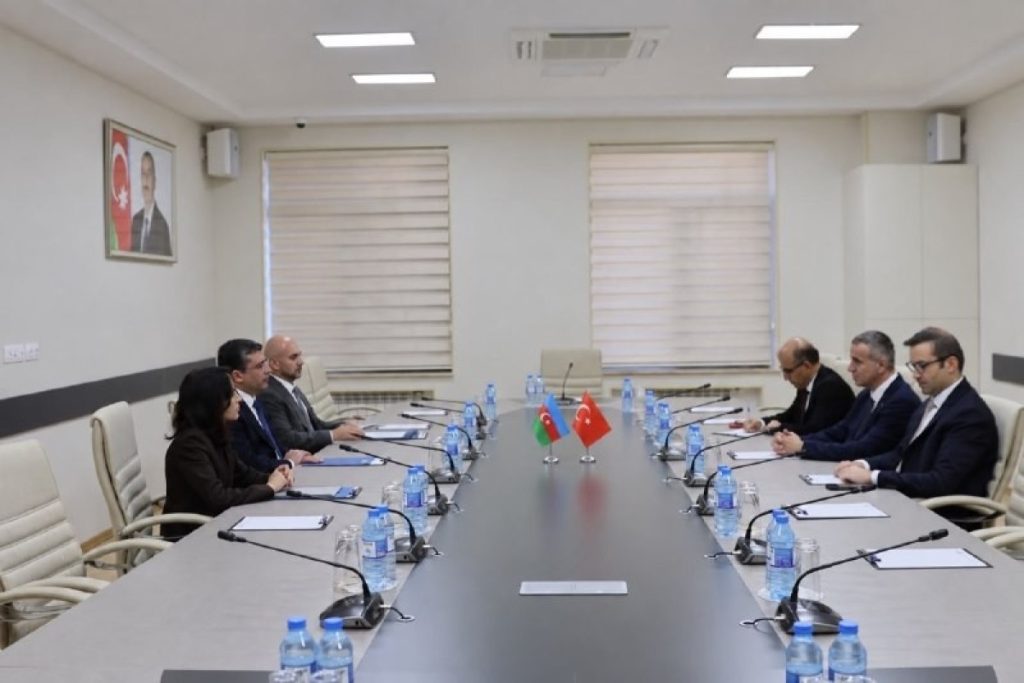
BAKU, Azerbaijan — The Media and Broadcasting Council has hosted a high-level delegation from Türkiye led by Ferhat Pirinççi, Deputy Head of the Public Relations Department of the Presidential Administration of Türkiye, for talks aimed at deepening bilateral cooperation in media and communication, the Media and Broadcasting Council told APA. Chairman of the Media and Broadcasting Council Ahmad Ismayilov received the Turkish delegation at the council’s headquarters. The meeting was part of the ongoing strategic dialogue between the two brotherly countries, which have consistently supported each other across political, economic, and cultural spheres. Azerbaijan and Türkiye share deep historical roots and maintain a partnership often summarized by the motto “one nation, two states.” In recent years, the two countries have implemented numerous joint projects in energy, transport, defense, and increasingly in the media field. The talks focused on practical ways to expand cooperation, including the exchange of experience in the modern information environment, strengthening joint efforts to combat disinformation, and promoting professional contacts between media representatives. The Azerbaijani side underlined that Türkiye is not only a friend but a strategic partner, and that media and communication cooperation should reflect the high level of political and moral solidarity between the two nations. The meeting took place in a warm and constructive atmosphere, with participants reaffirming their commitment to continue working together on all issues of mutual interest. The council’s statement described the talks as productive and useful.
Ahmad Ismayilov opened the meeting by welcoming the Turkish delegation and emphasizing the importance of existing cooperation between Azerbaijan and Türkiye in the fields of media and communication. He said that the two countries have achieved significant results in many areas thanks to their unity and joint efforts. In the media sphere, Azerbaijan and Türkiye have developed close ties between state news agencies, television channels, radio stations, and online platforms. The chairman stressed that the modern information environment requires constant attention and adaptation, and that Azerbaijan is interested in studying Türkiye’s experience in public relations and media management. He noted that the Media and Broadcasting Council works to ensure compliance with broadcasting legislation, protect the rights of audiences, and promote professionalism in journalism. In this context, cooperation with Turkish institutions is highly valuable. Ismayilov also highlighted the importance of media in informing the international community about the realities of the South Caucasus, the restoration of Azerbaijan’s liberated territories, and the normalization of relations in the region. He expressed gratitude to Türkiye for its continued support and solidarity, especially in the period following the 44-day Patriotic War and during the reconstruction of Karabakh and Eastern Zangezur. The chairman said that Azerbaijani media professionals greatly appreciate the opportunity to learn from their Turkish colleagues and to exchange views on common challenges. He expressed hope that the visit of Ferhat Pirinççi and his delegation would open a new page in bilateral media cooperation and lead to concrete projects in the near future. The meeting participants paid special attention to the role of media in strengthening the unity of the Turkic world and preserving common cultural values.
The meeting then turned to the challenges of the modern information environment. Both sides noted that disinformation has become one of the main threats to public trust and social stability. False narratives, manipulated images, and coordinated information attacks are used to influence elections, incite hatred, and undermine the sovereignty of states. Azerbaijan and Türkiye, due to their geopolitical positions and principled stands on international issues, are often targets of such campaigns. Therefore, the exchange of experience and the strengthening of joint efforts to combat disinformation are of particular importance. The participants discussed the need to develop common approaches to identifying and neutralizing fake news, as well as to increase the media literacy of the population. They stressed that cooperation between state institutions, media regulators, fact-checking organizations, and civil society is essential for effective counteraction. The two sides also considered the possibility of creating joint monitoring mechanisms and rapid response tools that would allow them to react quickly to information threats. The importance of promoting objective, fact-based journalism was emphasized. Journalists should be equipped with the skills to verify information, understand the digital ecosystem, and resist pressure from various forces. The meeting noted that both countries have already accumulated significant experience in this field and that sharing this experience would benefit media professionals and society as a whole. In the framework of the fight against disinformation, the participants also touched on the role of international cooperation and the need to promote the positions of Azerbaijan and Türkiye on regional and global platforms. The two sides expressed readiness to coordinate their messages and actions in international media and within international organizations, including the Organization of Turkic States and other multilateral formats.
Ferhat Pirinççi, Deputy Head of the Public Relations Department of the Presidential Administration of Türkiye, spoke in detail about the new opportunities created by digital transformation in the fields of media and communication. He noted that the rapid development of digital technologies has radically changed the way information is produced and consumed. Social networks, mobile applications, and artificial intelligence are now at the center of public communication. At the same time, these technologies pose serious challenges for governments, media organizations, and societies. Pirinççi said that Türkiye has been actively developing its digital communication infrastructure and implementing modern approaches in public relations. The Turkish experience includes the use of digital platforms for direct communication with citizens, the development of online government services, and the implementation of projects to support digital media. He stressed that effective application of new media tools can significantly increase the reach and impact of public communication. However, it is equally important to maintain ethical standards and ensure the reliability of information. The delegation leader also spoke about the importance of modern communication approaches, such as strategic communication, crisis communication, and audience analytics. In an environment where citizens receive information from many sources, state institutions must be able to convey their messages clearly and convincingly. Pirinççi expressed confidence that Azerbaijan and Türkiye can successfully cooperate in these areas, sharing knowledge and best practices. He noted that the two countries have many common values and goals, and that their media systems face similar tasks: to inform, educate, and unite people. He proposed to intensify contacts between the relevant departments and to organize joint training events for specialists. The Turkish side, he said, is open to concrete proposals and ready to support initiatives that will strengthen the professional potential of the media sector in both countries.
The importance of expanding professional ties and joint initiatives between media representatives of the two countries was also a key topic of the meeting. The participants agreed that personal contacts and direct communication between journalists, editors, and media managers are the best way to build trust and mutual understanding. They discussed the possibility of organizing regular visits of journalists from Azerbaijan to Türkiye and vice versa, as well as joint editorial projects, including documentaries, analytical programs, and online content. The two sides also considered holding bilateral media forums and round-table discussions on issues related to media law, digital ethics, and the future of journalism. Young journalists and media students should be particularly involved in such initiatives, as they will shape the future of the media space. The meeting noted the importance of cooperation between educational institutions and media organizations in both countries. Exchange programs for students and teachers, joint research projects, and the development of curricula in media and communication could be part of a long-term strategy. The participants emphasized that the Turkic-speaking world offers great opportunities for cooperation in media and information. The creation of a common Turkic media platform, where news, cultural programs, and educational materials are shared, would help bring the peoples of the Turkic states closer together. Azerbaijan and Türkiye, as two leading countries of the Turkic world, can take the lead in this area. The meeting also touched on the need to strengthen cooperation between official news agencies and public broadcasters, which are important sources of reliable information. The two sides expressed satisfaction with the current level of cooperation, but agreed that there is still room for growth. They decided to continue consultations on these issues and to develop a roadmap for joint activities in the near future.
In conclusion, the participants exchanged views on opportunities for a coordinated approach to modern information challenges and other issues of mutual interest. They recognized that in the digital age, no country can solve media and communication problems alone. International cooperation, mutual support, and the exchange of experience are essential. Azerbaijan and Türkiye, thanks to their unique relationship, can serve as an example of effective partnership in this field. The meeting at the Media and Broadcasting Council was another manifestation of the strategic alliance between the two countries. It showed that the scope of their cooperation goes beyond traditional areas and extends to the new, rapidly changing world of information. The participants agreed to maintain regular contacts and to implement the discussed initiatives. They also emphasized the importance of ensuring that media cooperation is based on the principles of professionalism, objectivity, and respect for the public interest. The Azerbaijani side thanked the Turkish delegation for their visit and expressed hope for continued fruitful cooperation. The Turkish side, in turn, invited Azerbaijani colleagues to visit Türkiye for further talks. The meeting ended in a friendly atmosphere, reflecting the spirit of brotherhood and mutual respect that characterizes Azerbaijani-Turkish relations. The results of the meeting are expected to contribute to the development of the media sphere in both countries and to the strengthening of the unity of the Turkic world. The Media and Broadcasting Council and the Public Relations Department of the Presidential Administration of Türkiye are expected to maintain close contacts and work together on joint projects, including in the fight against disinformation, digital transformation, and professional training. This high-level dialogue once again demonstrated that Azerbaijan and Türkiye are not only strategic partners but also two nations with a common vision for the future.


