







Misinformation in July 2026: A Month of Fabricated Narratives and AI-Driven Deception
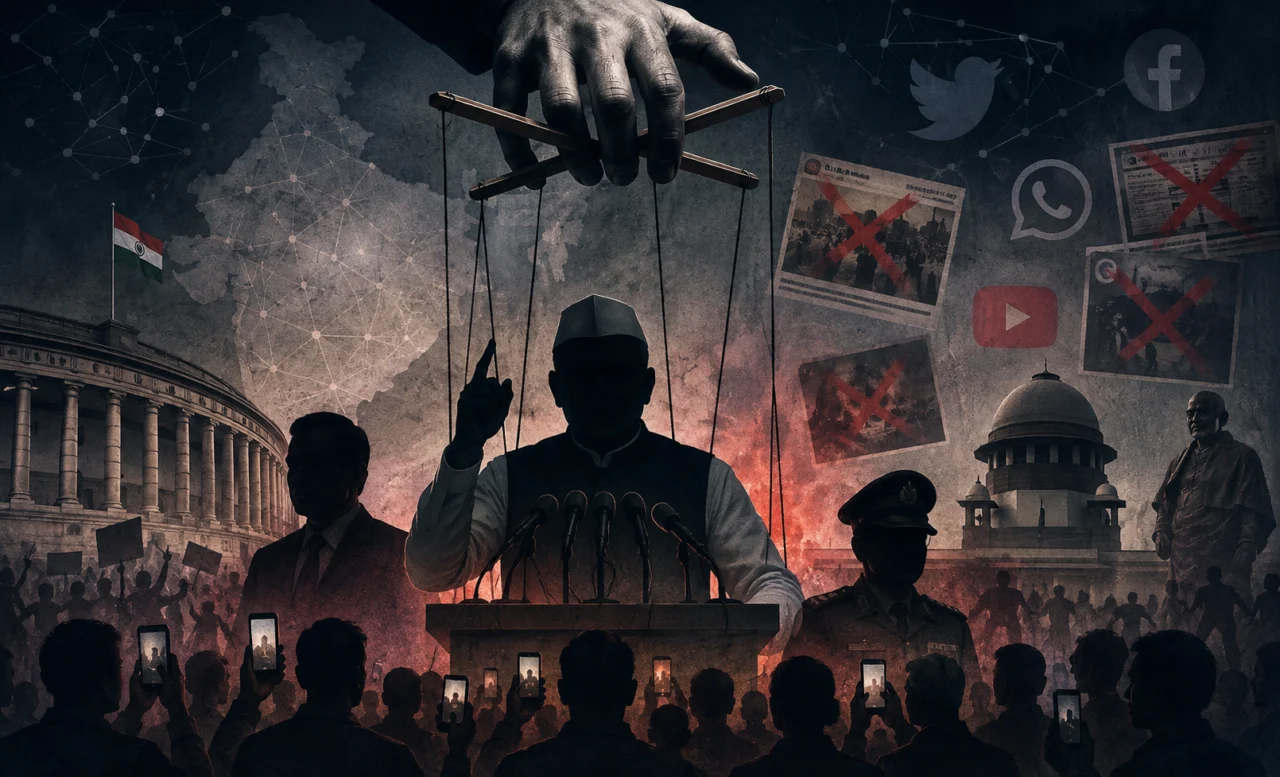
The digital landscape in July 2026 presented a stark case study in the proliferation of misinformation, with over twenty-nine distinct instances of fabricated claims, manipulated media, and false narratives circulating across social media platforms. The month’s documented incidents reveal a troubling sophistication in the methods used to deceive the public, ranging from AI-generated videos and graphics to the cynical re-contextualization of old footage. These campaigns did not discriminate, targeting a wide cross-section of society including top political leaders, constitutional authorities, religious institutions, and journalists. The sheer volume and coordinated nature of these false claims highlight a persistent challenge to democratic discourse, where the rapid spread of digitally altered content threatens to undermine public trust in institutions and factual reporting.
Political figures were frequent targets of these misinformation campaigns, with fabricated statements and manipulated graphics designed to misrepresent their positions or create entirely false narratives. Prime Minister Narendra Modi was a primary subject, with several incidents involving doctored visuals. One claim involved a viral resignation letter bearing his signature, which was quickly debunked as an AI-generated fabrication. Another used a digitally altered graphic to spin a fabricated, self-praising remark about the world discussing his talent, while yet another falsely claimed he announced a “Free Mobile” scheme in an AI-manipulated video. A more insidious manipulation involved an AI-altered image that depicted him signing a girl’s T-shirt in an inappropriate manner, a deliberate distortion of an innocent public interaction. Similarly, opposition leader Mehbooba Mufti’s claim about restrictions on Friday prayers at a historic mosque was disproven by officials, who clarified that a security operation caused temporary inconvenience but no infringement on religious practices. These instances demonstrate a clear pattern of using high-profile figures to drive engagement and spread discord through fabricated content.
The use of artificial intelligence and sophisticated editing tools emerged as the most dominant trend in the month’s misinformation ecosystem. Fact-checks routinely concluded that videos and graphics had been “generated using artificial intelligence” or “digitally altered.” This was evident in cases like a fabricated video of Lieutenant General Rajeev Puri announcing new deployments in Delhi, and a manipulated video that linked BJP MP Ravi Kishan’s old remarks to a recent encounter, distorting his original statement to create a false context. The manipulation was not always high-tech; in one instance, an old video of an Assam Rifles convoy in Manipur was recycled to falsely claim it showed Chinese forces crossing the border. Similarly, a three-year-old video of a border standoff was shared as new evidence of China establishing a colony on the Indian side of the LAC. This blend of advanced AI and simple recycling of old footage represents a formidable challenge for even the most diligent consumers of news.
The integrity of critical institutions and the media was also placed under direct assault. The police and security forces were frequent targets, with viral videos falsely claiming that Delhi Police used nail-studded batons against protesters. These claims, despite being officially debunked, were amplified by accounts with significant followings, including journalists like Mohammed Zubair. Another widely shared video purporting to show Delhi Police assaulting women was traced back to an unrelated 2025 traffic dispute in Dehradun. Religious institutions were also caught in the crossfire, with a misleading narrative falsely claiming that the Ancient Hanuman Temple in Connaught Place had shut its gates on student protesters. The temple chief’s clarification that the closure was a brief measure to ensure safety after an internal dispute was a crucial corrective. The media portal The Print also had to be corrected after a claim about government ministries being restricted from using AI models was denied by the Ministry of Electronics and Information Technology.
The targets of fabricated quotes and manipulated graphics also included journalists, opposition leaders, and foreign figures, indicating a broad effort to destabilize the entire information landscape. A fabricated postcard attributed a promise of Yogi Adityanath’s 2027 re-election to Shankaracharya Avimukteshwaranand, which was later debunked, clarifying the seer’s actual remarks on cow protection. False statements were attributed to a range of individuals, from BJP leader Giriraj Singh, who was falsely quoted twice on controversial topics, to former US President Donald Trump, who was alleged to have called India a dictatorship. The fabrication even extended to foreign leaders like Sheikh Hasina and Chinese officials. Social media influencers and media portals were often the primary vectors for these narratives, sharing the falsified graphics and videos without adequate verification, thus playing a pivotal role in amplifying the misinformation.
The wide range of methods and targets reveals a coordinated and deliberate campaign to manipulate public opinion and erode trust. The recurring patterns involve attributing inflammatory or nonsensical statements to public figures, using AI to create realistic yet fake videos, and presenting old, unrelated footage as evidence of current events. Official clarifications became a necessary counterpoint to these viral falsehoods, with police departments, ministries, temple authorities, and media spokespersons repeatedly issuing statements to correct the record. However, the speed at which false narratives spread often outpaced these corrections, underscoring the immense difficulty of effectively debunking misinformation once it has taken root online.
In conclusion, the misinformation landscape of July 2026 serves as a critical reminder of the escalating battle for factual integrity in the digital age. The events of the month demonstrate a clear and present danger posed by AI-generated content and sophisticated media manipulation, which if left unchecked, could have profound consequences for democratic processes and social harmony. The findings reinforce the absolute necessity for a multi-pronged response that includes responsible journalism, rigorous fact-checking, enhanced media literacy among the public, and pressure on digital platforms to proactively curb the spread of such deceptive content. The integrity of public information is under siege, and the need for vigilance, verification, and critical thinking has never been more urgent.


