


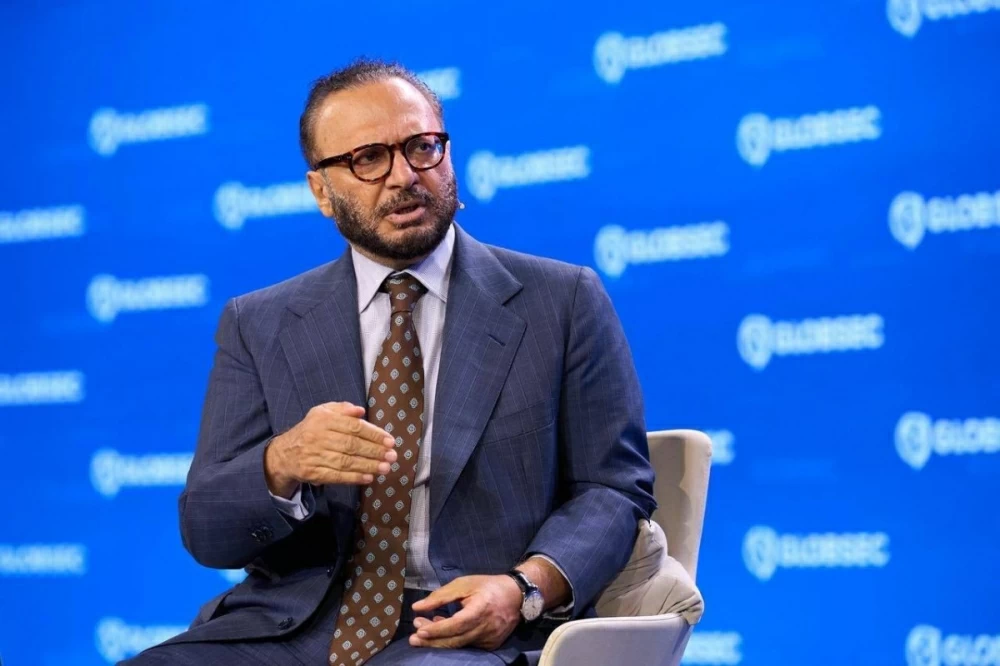
Gargash: Media is the Decisive Frontier in the Battle for Regional Stability – Credibility and Fairness are Non-Negotiable
In a striking and strategically significant intervention, His Excellency Dr. Anwar bin Mohammed Gargash, the Diplomatic Advisor to the President of the United Arab Emirates, has issued a profound clarion call regarding the role of the press in the contemporary Middle East. Dr. Gargash, a veteran architect of Emirati foreign policy and a keen observer of the region’s intricate geopolitical chessboard, underscored that the media has evolved far beyond a mere conduit of information to become a “key tool” in navigating the “delicate circumstances” currently gripping the region. His remarks, delivered via his official account on the X platform (formerly Twitter), serve as both a sobering assessment of the information warfare raging alongside physical conflicts and a definitive ethical roadmap for journalists, policymakers, and media institutions operating in this volatile environment. By framing the media narrative as an intrinsic “component of the balance of conflict,” Dr. Gargash has elevated the profession from a passive observer role to an active, influential actor whose output can either exacerbate tensions or pave the way for resolution and stability.
The context of Dr. Gargash’s statement is critical to understanding its weight. The Middle East is currently traversing a labyrinth of acute crises, ranging from the ongoing war in Gaza and its devastating humanitarian toll to the specter of escalating naval confrontations in the Red Sea, alongside entrenched political divisions and the ever-present threat of non-state actors destabilizing sovereign nations. In such a “delicate” landscape, information is a double-edged sword. Dr. Gargash’s assertion that the media is a “key tool” acknowledges that modern conflict is no longer restricted to the physical battlefield of tanks, missiles, and drones; it is simultaneously fought on a digital battlefield of screens, social media feeds, and 24-hour news cycles. Every image broadcast, every headline published, and every unverified report amplified carries the potential to shift the trajectory of a conflict, to inflame sectarian tensions, or to delegitimize diplomatic efforts. The UAE, which has positioned itself as a hub for regional diplomacy and a bastion of stability, recognizes that the perception of events is often as consequential as the events themselves. Therefore, Dr. Gargash’s remarks implicitly challenge media outlets to recognize their amplified responsibility, arguing that a reckless or biased narrative can be as damaging as a military miscalculation, potentially dragging the region into deeper chaos or undermining the fragile peace initiatives that regional leaders are tirelessly working to establish.
Central to Dr. Gargash’s thesis is his contention that “the narrative is part of the balance of conflict.” This is a profound analytical shift that reframes the media from an external commentator to an internal variable within the strategic equations of war and peace. In traditional geopolitical theory, power is measured in terms of military capability, economic resources, and diplomatic alliances. However, in the post-truth era, narrative power—the ability to control the story, to define who is the aggressor and who is the victim, and to shape global public opinion—has become a fourth pillar of state power. Adversaries of stability leverage this dynamic ruthlessly, deploying disinformation, deepfakes, and coordinated propaganda campaigns to sow confusion, erode trust in legitimate institutions, and rally support for their own causes. By stating that the narrative is part of the “balance,” Dr. Gargash is effectively warning that a vacuum in credible reporting will inevitably be filled by malicious actors. If the professional media abdicates its role of objective verification, the information space will be conquered by partisan voices and state-sponsored misinformation, tilting the balance of conflict toward greater violence and instability. This perspective is particularly potent given the UAE’s experience as a target of such coordinated disinformation campaigns in recent years. Dr. Gargash’s words serve as a strategic reminder that a well-informed and carefully structured media message is a form of “soft power” that can complement military deterrence and diplomatic negotiation, providing the necessary cognitive clarity required to resolve complex disputes peacefully.
However, Dr. Gargash is not simply advocating for a louder media; he is advocating for a better media. His emphasis on “credibility and balance” as a “professional and ethical imperative” is a direct rebuke to the prevailing culture of sensationalism and algorithmic outrage that has come to dominate global journalism. In a fragmented media ecosystem, where partisan outlets often prioritize engagement metrics over factual accuracy, the concept of balance has become increasingly distorted. Dr. Gargash consciously clarifies this ethical standard by adding a crucial caveat: the need for balance “without naivety or equality between parties that do not abide by the same rules.” This crucial refinement draws an ethical line in the sand, dismissing the false equivalence that often plagues modern reporting. To be balanced does not mean treating a sovereign state defending its borders in accordance with international law as morally equivalent to a terrorist militia that deliberately targets civilians and uses human shields. Likewise, it rejects the naivety of providing a platform for extremist propaganda under the guise of “giving both sides a voice.” Instead, Dr. Gargash is championing a sophisticated, principled form of journalism that applies rigorous standards of verification and contextualization, holding all parties accountable to international norms and standards of truthfulness. He argues that a media which equates the actions of a responsible state with those of an outlawed non-state actor is not practicing balance; it is practicing a dangerous form of moral relativism that legitimizes violence and erodes the normative framework that underpins the international order.
Building upon this foundation, Dr. Gargash further outlines the tangible requirements of this professional standard. He demands a media that “understands the environment of confrontation,” which necessitates a deep, contextual knowledge of regional history, tribal dynamics, religious sensitivities, and geopolitical fault lines—not just a superficial understanding of current events. This is a call for specialized, expert journalism as opposed to reactive crowd-sourced reporting. Furthermore, he mandates that this media must “protect the truth from misinformation and manipulation.” In an era where artificial intelligence can fabricate convincing imagery within seconds, the gatekeeping function of professional journalists has never been more essential. Combating misinformation requires proactive fact-checking, sourcing, and an institutional courage to debunk viral falsehoods, even when those falsehoods align with popular sentiment or political pressure. Finally, and perhaps most crucially, Dr. Gargash speaks to the audience, highlighting the need to “preserve the awareness of the recipients.” This is a profound concept that reframes the media’s duty beyond the mere transmission of facts to the protection of the public’s cognitive integrity. The ultimate target of any conflict narrative is the human mind—the civilian whose perception of “us versus them” is shaped by the headlines they consume. Dr. Gargash argues that the media must treat its audience not as passive consumers to be manipulated for ratings, but as citizens whose mental clarity and emotional stability are integral to the social fabric. By preserving the audience’s awareness, the media shields society from psychological warfare, preventing panic, hatred, and societal fragmentation that are the strategic goals of disinformation campaigns.
In conclusion, Dr. Anwar Gargash’s statement is far more than a routine diplomatic observation; it is a definitive articulation of a modern security paradigm. By explicitly identifying the media and its narrative as a “key tool” and a component of the “balance of conflict,” he has delivered a stark wake-up call not only to Arab media outlets but to the global journalistic community. His meticulously worded message—promoting credibility and balance while explicitly rejecting naivety and false equivalence—provides a robust ethical framework capable of navigating the moral quagmires of contemporary warfare. The call for an “accurate and fair” media that understands confrontation, protects truth, and preserves public awareness is a call for resilience against the assault on objective reality that has become a hallmark of 21st-century conflict. As the UAE continues to position itself as a mediator and a stabilizing force in a turbulent region, Dr. Gargash’s words stand as a directive: in the enduring struggle between civilization and chaos, the truth, delivered responsibly and strategically, remains the most potent weapon. For the sake of regional peace and global stability, his advice must be heeded, lest the voices of misinformation and extremism fill the void left by a compromised press. The battle for the headlines, Dr. Gargash has made clear, is inseparable from the battle for the very future of the region.