







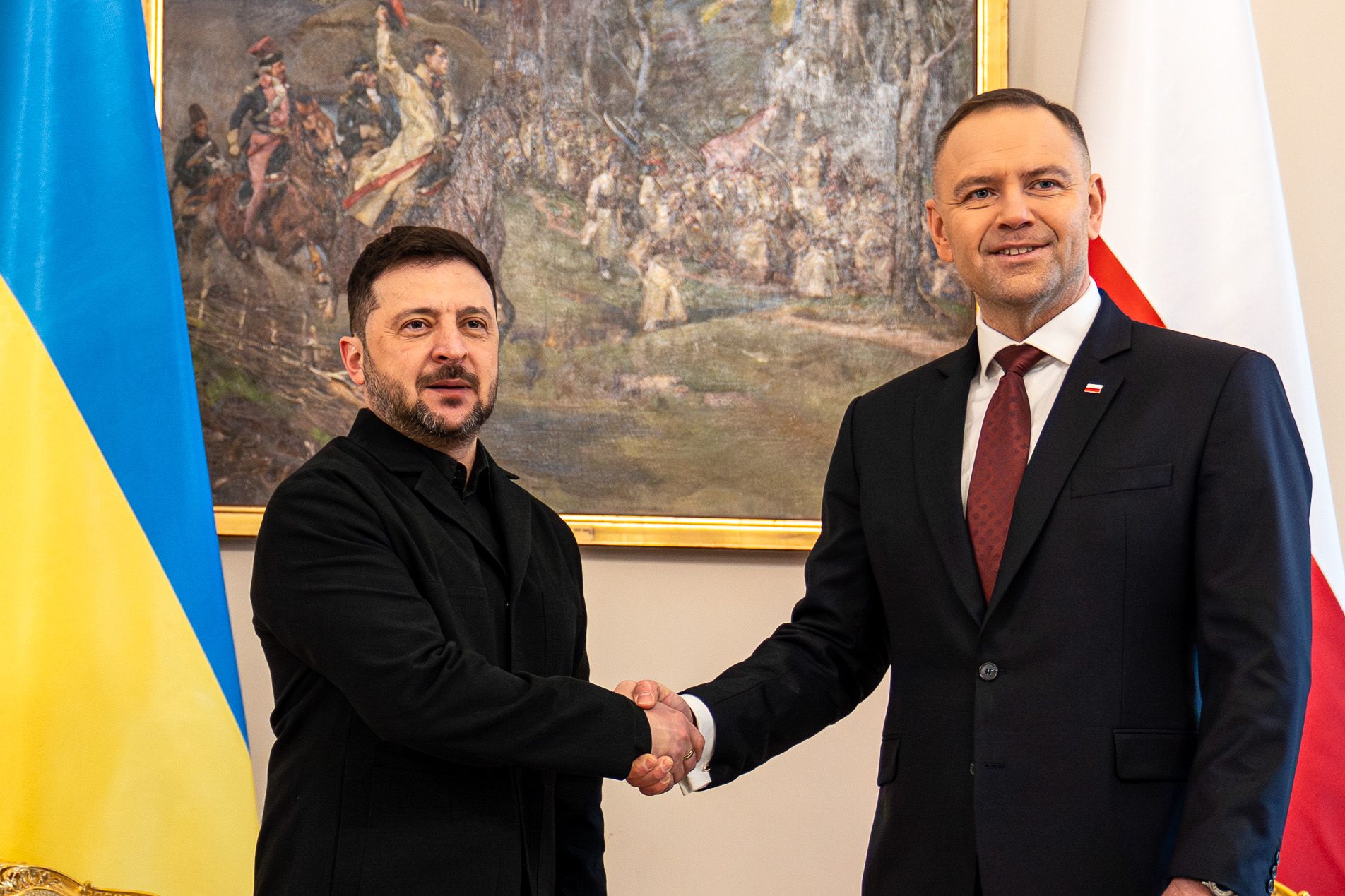
A sophisticated Russian-linked disinformation campaign, identified as the “Matryoshka” bot network, has been caught orchestrating a digital offensive designed to weaponize historical tensions between Poland and Ukraine. According to the Antibot4Navalny monitoring group, this operation launched on June 22 to exploit a significant diplomatic rupture following the decision by Ukrainian authorities to grant a military unit a title honoring the Ukrainian Insurgent Army (UPA). This move triggered an immediate, severe backlash in Warsaw, culminating in Polish President Karol Nawrocki’s decision to strip Ukrainian President Volodymyr Zelensky of Poland’s highest state honor, marking one of the most volatile episodes in bilateral relations since 2022.
The Matryoshka operation utilizes a well-rehearsed propaganda playbook, focusing heavily on accusations of “Nazism” within the Ukrainian state and its leadership. By fabricating inflammatory content, the network seeks to misrepresent the historical debate as a contemporary endorsement of fascist ideology. Among the falsified claims detected by researchers is a fabricated statement attributed to Piotr Cywinski, the director of the Auschwitz-Birkenau State Museum, which baselessly asserts that he demanded Zelensky be barred from Holocaust commemoration events. Such content is specifically engineered to radicalize public sentiment and alienate potential Polish allies from Kyiv’s cause.
Expanding its reach beyond internal Polish-Ukrainian affairs, the disinformation network has begun targeting Ukraine’s broader international coalition. Recent posts have falsely claimed that Estonian officials are protesting the situation by returning Polish state honors, while simultaneously manufacturing a narrative that an Estonian Member of the European Parliament invited Zelensky to a “gathering of SS veterans.” By casting Ukraine as isolationist and globally condemned, the campaign attempts to erode the international legitimacy of the Ukrainian government and sow discord among its most staunch European supporters.
The influence operations are not limited to historical and political grievances; they also include malicious attempts to incite hostility on military grounds. One notable fabrication alleges that Polish fighters serving in Ukraine are being executed by their own Ukrainian allies, whom the propaganda claims view the Polish nation as “slaves.” These alarmist narratives, intended to incite fear and rage, are frequently amplified through the deceptive use of logos belonging to credible, established media outlets like Euronews, Der Spiegel, and the Institute for the Study of War (ISW). By pairing legitimate branding with unrelated stock footage, the network effectively tricks casual social media users into believing in the authenticity of the propaganda.
While the Matryoshka network has historically inflated view counts on platforms like X—making it difficult to gauge the true extent of its audience—the persistent nature of these campaigns poses a significant threat to regional stability. Monitoring groups point out that this is not an isolated event but rather a recurring methodology previously observed during disputes between Ukraine and Israel, as well as during Hungarian elections. Experts warn that the Kremlin is strategically capitalizing on the legitimate, long-standing historical grievances surrounding the 1943-1945 Volyn massacres—a subject that remains a painful point of contention regarding the UPA—to drive a wedge between two nations that have otherwise maintained a vital security partnership.
Ultimately, the goal of this digital interference is to destabilize the logistical and political backbone of Ukrainian resistance against the ongoing Russian invasion. Poland, having hosted over two million refugees and serving as the primary corridor for Western arms, is a high-value target for Russian intelligence. As Polish and Ukrainian authorities navigate this delicate diplomatic crisis, the FACT project and other watchdog organizations continue to underscore the danger of these influence operations, warning that unless public awareness of such tactics increases, the seeds of distrust sown by covert bot networks may create real-world consequences for the security architecture of Eastern Europe.


