









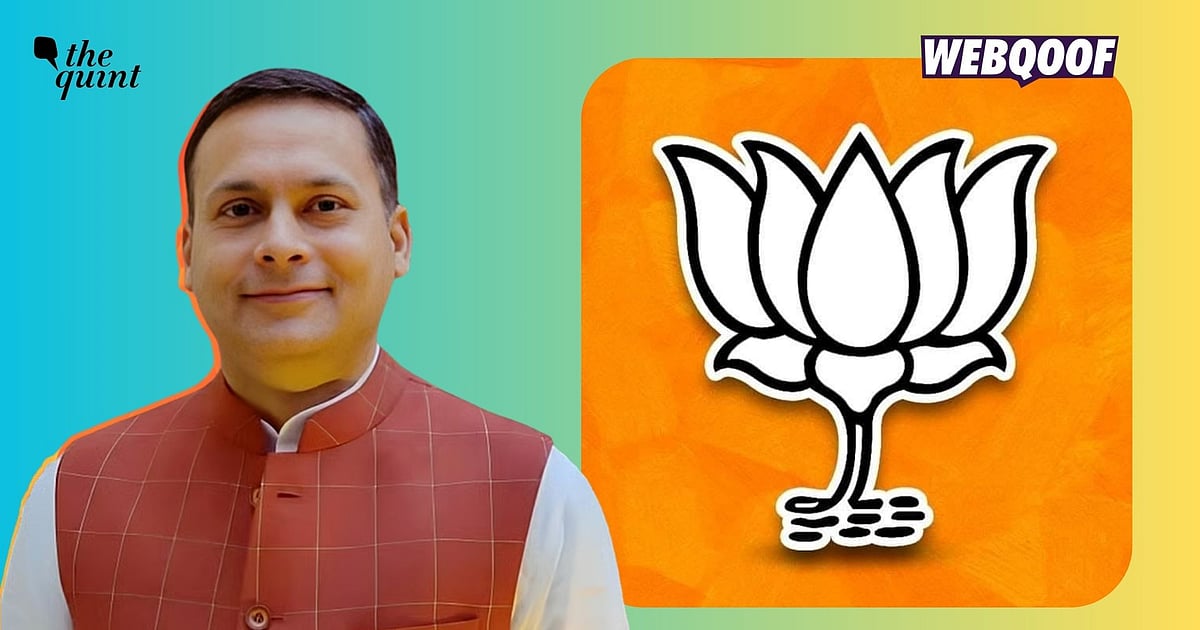
Amit Malviya’s decade-long stewardship of the Bharatiya Janata Party’s (BJP) Information Technology (IT) Cell represents one of the most consequential, and undeniably controversial, episodes in the evolution of Indian political communication. Rising from relative obscurity to become the undisputed czar of the party’s digital empire, Malviya’s tenure has been a paradox—a masterclass in aggressive narrative control offset by catastrophic legal defeats. The Quint’s meticulous analysis of his career reveals a figure who perfected the art of weaponized social media, only to find his strategies systematically dismantled by the judiciary. His recent defeats in the Supreme Court, particularly the defamation battle against Rahul Gandhi, have encapsulated the fundamental tension of his role. While he successfully built a relentless propaganda machine that skewed public perception and countered opposition attacks with unflagging ferocity, he consistently overstepped the legal and ethical boundaries of free speech. His story is not just about one man’s rise and fall; it is a case study in how the digital arms race of Indian politics collides with the immutable principles of constitutional justice, revealing an unsettling reality where a single party functionary could orchestrate mass perception while remaining legally vulnerable.
The architecture of Malviya’s dominance was built on centralized control and relentless online warfare. Taking charge in the mid-2010s, following the BJP’s historic 2014 electoral victory, he transformed the IT Cell from a mere social media handling unit into a sprawling content factory with thousands of paid volunteers, micro-targeted audience databases, and rapid-response squads. His primary weapon was his personal X (formerly Twitter) account, which amassed millions of followers and served as a daily launching pad for broadsides against journalists, academics, and political opponents. His methodology relied on a “first-strike” tactic: flooding timelines with counter-narratives, conveniently edited video clips, and selective “fact-checks” that invariably favored the BJP. This digital ecosystem functioned as an alternate reality for millions of voters, effectively bypassing mainstream media gatekeepers. The Quint detailed how Malviya would often amplify content from obscure pro-BJP accounts, bestowing upon them mainstream legitimacy, and would coordinate with senior party leaders to create monolithic messaging. However, this efficiency in spreading propaganda came at a significant risk. Numerous independent fact-checkers and international media outlets—including The New York Times—exposed instances where the IT Cell circulated doctored videos, manipulated audio, and inflammatory imagery designed to incite communal polarization or defame opposition leaders. Malviya’s counter-assault involved not only rebuttals but also legal threats, laying the groundwork for his eventual judicial confrontations, where he often used the threat of defamation suits to silence critics who had no resources to fight extended legal battles.
The definitive legal battle that would come to define his tenure began in early 2024, stemming from a viral social media post. Congress leader Rahul Gandhi had shared a screenshot from a government website (MyGov) showing a video of a woman, alongside a claim that Malviya was directly linked to the creation or distribution of a threatening deepfake focused on electoral integrity. In response, Malviya filed a civil defamation suit in a Delhi court, seeking an immediate injunction to force the removal of Gandhi’s tweet. In a swift and arguably draconian move, the trial court granted an ex-parte interim order without hearing Gandhi’s defense, directing Twitter (now X) to take down the offending post within 24 hours. This temporary injunction effectively silenced a senior opposition MP based solely on the plaint filed by a political rival, raising immediate red flags among civil liberties advocates. Malviya’s legal team argued that Gandhi’s tweet was defamatory, malicious, and caused irreparable damage to his reputation and political standing. However, the initial victory was short-lived. As Gandhi appealed to the Delhi High Court, the larger question of constitutional rights—specifically, the fundamental right to free speech under Article 19(1)(a)—loomed large. Critics noted that Malviya was weaponizing the civil defamation mechanism to suppress dissent, a tactic increasingly prevalent among the powerful, and the case quickly became a litmus test for judicial independence.
The apex court’s intervention in the matter dramatically shifted the narrative. Hearing Gandhi’s appeal, a bench of the Supreme Court, comprising justices Sanjay Kishan Kaul and Hrishikesh Roy, delivered a stinging rebuke that dismantled the fabric of Malviya’s legal strategy. The court observed that the interim injunction had been passed with “malice” and a clear abuse of process, severely criticizing the trial court for its haste. It emphasized that during preliminary hearings, courts must not restrain free speech unless the speech is patently illegal or harmful, ignoring checks like ‘fair comment’ and ‘public interest’ protections. The bench underscored that a public figure like a Member of Parliament could not be gagged for commenting on the actions of a party functionary, especially concerning matters that influence the electoral discourse. The judgment effectively invalidated the ex-parte injunction, allowing Gandhi’s tweet to remain active. More importantly, the judges admonished Malviya for trying to silence critics through technical legal loopholes, calling into question his own credibility as a purveyor of truth. The Quint’s coverage highlighted that this verdict was a massive blow not only to Malviya’s personal ego but also to the BJP’s strategic reliance on pre-trial injunctions to muzzle inconvenient voices. It established a critical precedent: the judiciary would not become a complicit tool in digital propaganda, and the right to dissent would not be curtailed by the wealth and political power of a litigant.
The fallout from this Supreme Court verdict was seismic on multiple fronts. Opposition leaders hailed it as a vindication of democratic values, while legal scholars criticized Malviya’s broader pattern of using litigation as a “SLAPP” (Strategic Lawsuit Against Public Participation) tactic designed to exhaust and intimidate opponents. The Quint noted that Malviya’s reputation as an infallible “fact-checker” was decimated, as the court’s remarks effectively branded his claims as legally frivolous and his motives as partisan. This judicial acknowledgment emboldened his critics, who promptly dredged up countless other instances of misinformation and coordinated harassment from his IT cell, previously muted by fear of legal reprisal. Furthermore, the verdict sent a chilling message to political campaigners ahead of the 2024 general elections: digital slander would face judicial oversight. It also exposed an inherent weakness in Malviya’s approach—the reliance on absolute centralization made him a single point of failure. As the legal pressure mounted, his political opponents began structuring their online campaigns to specifically attack his credibility, using his documented missteps and lavish lifestyle as ammunition. Within the BJP, whispers arose about the decreasing efficacy of his aggressive style, which now alienated neutral voters fatigued by constant polarization and hostile exchanges, forcing a strategic reevaluation of how the party communicates with the increasingly discerning urban electorate.
Ultimately, Amit Malviya’s tenure as BJP IT cell head is a compelling and cautionary story of how power, when wielded without constitutional restraint, inevitably invites judicial correction. His innovative use of technology and data analytics was undeniably effective in building electoral majorities, but his obsessive pursuit of disinformation and his heavy-handed legal intimidation techniques have branded him as a divisive figure in Indian politics. The Supreme Court’s decisive ruling did not just overturn a single injunction; it reasserted the supremacy of constitutional free speech against the whims of a party machinery, setting a binding precedent for future cases. As this chapter draws to a close—with his authority being questioned and his future within the party uncertain amidst internal restructuring—the real lesson for Indian democracy is clear: while digital warfare can dominate the public square temporarily, the ultimate arbitrator of truth and accountability remains the judiciary. Malviya’s legacy will be remembered as one that blurred the line between legitimate political persuasion and unconstitutional coercion. He leaves behind a legal framework and precedent that will shape the conduct of India’s digital political warriors for years to come, reminding them that the constitution remains an unassailable fortress, and that the public’s right to information and dissent cannot be permanently suppressed by the algorithms of a single, however powerful, political operative.


