







Americans Value Press Freedom but Back Some Government Censorship, Pew Study Finds
A sweeping new study from the Pew Research Center, conducted under the Pew-Knight Initiative, reveals a deeply nuanced and at times contradictory American attitude toward press freedom: while an overwhelming majority of the public regards a free press as essential to democracy, a substantial share also believes the government should be allowed to suppress news stories under certain circumstances, particularly when false information or national security concerns are involved. The study found that 73 percent of Americans consider freedom of the press “very” or “extremely” important to the well-being of society, a sentiment that cuts across party lines, with majorities of both Democrats and Republicans affirming its importance. However, Democrats are significantly more likely than Republicans to hold this view, reflecting a broader partisan divide in how the two coalitions perceive threats to journalism and the role of media in civic life. The findings underscore a fundamental tension in American public opinion: citizens cherish the First Amendment protections that allow journalists to operate without government interference, yet they also recognize—and in some cases endorse—limits on that freedom when they perceive competing interests such as truth, security, or public safety to be at stake. This tension has become increasingly visible in an era of heightened political polarization, digital misinformation, and ongoing clashes between political leaders and the news media, and the Pew data suggests that Americans are not entirely sure where to draw the line between protecting an independent press and guarding against the harms that unfettered reporting can sometimes produce. The study, which surveyed thousands of U.S. adults, paints a portrait of a public that simultaneously champions the ideals of a free press and struggles with the practical realities of how to handle bad actors, reckless reporting, and genuine threats to the nation’s security. In doing so, it provides critical insight into the fragile status of press freedom in the United States and the competing values that shape how ordinary citizens think about the limits of journalism in a democratic society.
When it comes to specific scenarios, the Pew study reveals striking levels of support for government intervention against news organizations. Just over half of all Americans—including 59 percent of Republicans and 45 percent of Democrats—said it is acceptable for the government to demand that a news organization take down a story if it contains false information. That finding is particularly notable given the First Amendment’s strong protections against prior restraint, the legal principle that generally prevents the government from blocking publication in advance. Even more Americans, 60 percent overall, said the government should be able to force the removal of a story that poses a risk to national security, with 72 percent of Republicans and 50 percent of Democrats expressing support. These numbers indicate that while Americans may theoretically value a free press, many are willing to carve out exceptions when they believe the stakes are high enough. Peter Loge, director of the School of Media and Public Affairs at George Washington University, offered context for these findings, noting that most Americans recognize the need for some legitimate restrictions on what the press can publish. He drew an analogy to the famous legal maxim that one cannot falsely yell “fire” in a crowded theater, arguing that most people understand there are circumstances in which speech should be limited for the greater good. Loge suggested that many Americans would agree that certain national security matters are best left unsaid, or at least not disclosed at the moment they could cause harm. But he was careful to distinguish between ethical self-restraint by journalists and government-imposed censorship. While journalists have professional responsibilities to avoid harm, tell the truth, and strive for fairness, Loge said, that does not mean the government should be in the business of dictating what reporters can publish. He expressed deep skepticism about government oversight of the press, saying that even if he does not always love the way journalists police themselves, he would far prefer that to a system in which the government attempts to control what news organizations report. His comments highlight the difficult balance between acknowledging the real-world consequences of reporting and preserving the structural independence that allows journalism to serve as a check on power.
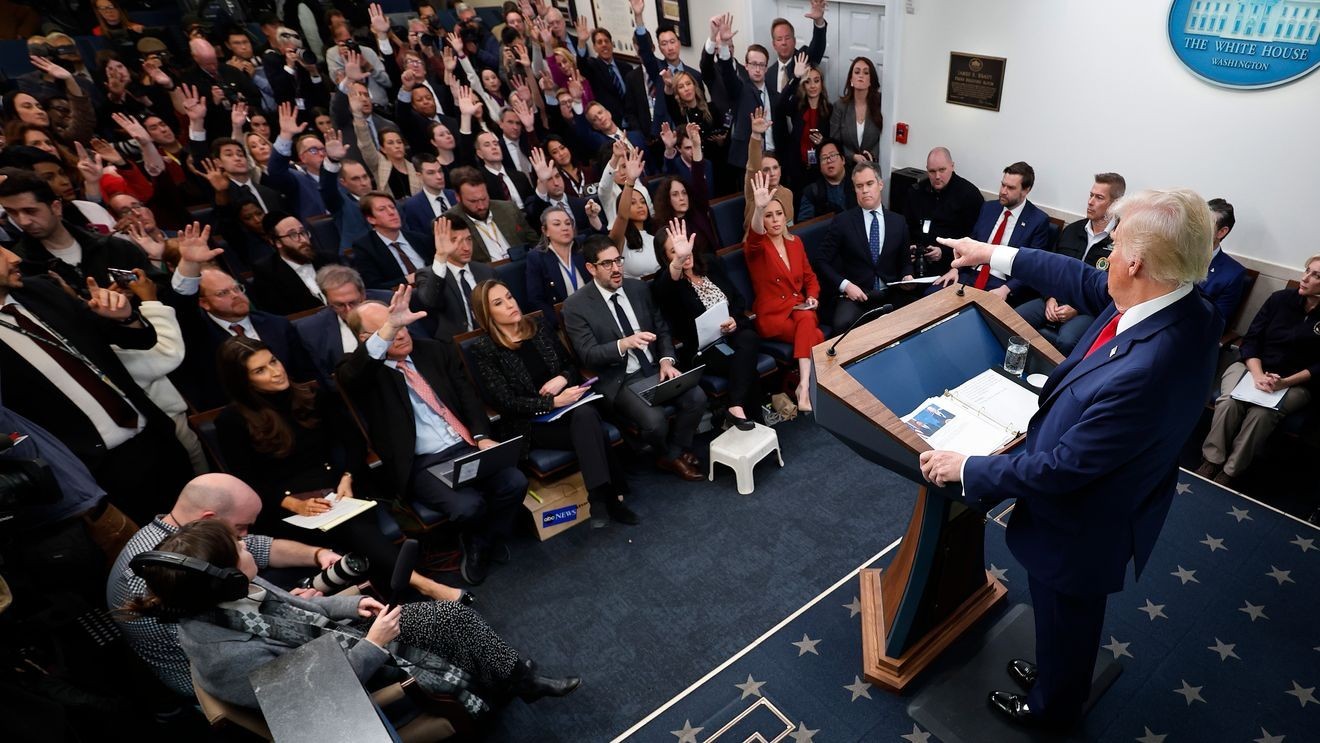
The Pew study also found that a significant portion of Americans believe press freedom has eroded in recent years, with more than four in ten respondents saying the press has become less free during the second Trump administration. This perception is deeply polarized: only 15 percent of Republicans agreed that press freedom has declined, while 72 percent of Democrats said the same. These partisan gaps reflect the broader political environment in which trust in the media has become increasingly fragmented along ideological lines. President Donald Trump has long criticized mainstream news outlets, frequently referring to journalists as enemies of the American people, and Loge argued that such rhetoric has had a corrosive effect on public confidence in the press. He said that while it is legitimate for a president to disagree with reporters and criticize their coverage, characterizing journalists as enemies of the state is dangerous, especially when those journalists are simply reporting stories that the president does not like. Loge emphasized that a president should always embrace a robust and open debate, regardless of whether the coverage is favorable, and that American democracy demands no less. His comments speak to a broader concern among media advocates that political leaders, by delegitimizing the press, can weaken the public’s ability to distinguish between reliable journalism and propaganda. The Pew data suggest that these concerns are not unfounded, as public confidence in the media has been declining for years, and the perception that press freedom is under threat has become more widespread, particularly among Democrats who worry that the government is using its power to intimidate or punish journalists. The study does not attempt to determine whether press freedom has actually declined in objective terms, but the fact that so many Americans believe it has is significant in itself, as public perception can shape political behavior and policy debates.
The Pew Research Center’s analysis also highlights the different ways that Republicans and Democrats think about press freedom and its challenges. According to the study, Democrats tend to worry more about direct government restrictions on the press, such as censorship, legal threats, or the arrest of journalists. Republicans, on the other hand, often express concerns about false information and the role of news organizations in controlling what stories the public sees. This difference in focus reflects deeper ideological divisions about the nature of threats to democracy: Democrats are more likely to see the government as the primary danger to press freedom, while Republicans are more likely to view the media itself as a powerful institution that can distort the truth and silence conservative voices. These contrasting perspectives help explain why support for government intervention varies so widely by party. Republicans may be more willing to endorse government action against news outlets because they believe those outlets are biased against them and routinely publish misinformation, whereas Democrats, despite their concerns about misinformation, are more wary of giving the government power to decide what is true and what should be suppressed. The study also found that only 28 percent of Americans believe the media is completely free to report the news today, a strikingly low number for a country that enshrines press freedom in its founding document. At the same time, 46 percent of Americans said they are extremely or very worried about potential restrictions on press freedom, with Democrats more likely than Republicans to express such concerns. These findings suggest that while Americans value press freedom in the abstract, they are uncertain about its current health and deeply divided about what poses the greatest threat to it. The data paint a picture of a public that is both skeptical of the media and anxious about the government’s role in regulating it, a combination that creates fertile ground for ongoing conflict over the future of journalism in the United States.
Beyond the headline findings, the Pew study explores a range of other controversial scenarios in which Americans are willing to entertain government limits on press freedom. Around 30 percent of Americans said it is at least sometimes acceptable for the government to force journalists to reveal the identities of unnamed government sources, a practice that many journalists argue is essential for protecting whistleblowers and sources who provide information in the public interest. A similar share of respondents said it is at least sometimes acceptable for the government to take away a news organization’s license to broadcast, a move that would effectively shut down a station and raise serious constitutional questions. While these numbers are lower than those for false information and national security, they still indicate that a meaningful minority of the public supports measures that journalists and civil liberties advocates would consider severe violations of press freedom. The study also found widespread skepticism about the honesty of both government and the media: around 80 percent of Americans said the government at least sometimes intentionally keeps important news from reaching the public, and a similar share said the same of news organizations. This mutual distrust is a defining feature of the current media environment, and it helps explain why so many Americans are torn between supporting press freedom and wanting to hold the media accountable. On one hand, the public does not fully trust the government to be transparent, which argues for a strong and independent press that can investigate official actions and inform citizens. On the other hand, the public does not fully trust the media either, which leads some to support government oversight as a check on journalistic misconduct. This paradox is at the heart of the Pew findings and presents a profound challenge for policymakers, journalists, and citizens who must decide how to balance competing values in a democratic society.
Ultimately, Peter Loge argued, freedom of the press is vital to American democracy, even if there are times when journalists should exercise restraint in what they report for the greater good. He framed democracy as an ongoing debate about what to do next, one that requires honest and open discussion if it is to function properly. “You can only have an honest debate if you have all perspectives and all perspectives are represented,” Loge said. His comments reflect a belief that the remedy for bad speech is not censorship but more speech, and that the role of the press is to provide the information and diverse viewpoints necessary for citizens to make informed decisions. The Pew study makes clear that Americans are deeply conflicted about how to apply these principles in practice. They value press freedom, but they also want protection from falsehoods, security threats, and media bias. They worry about government overreach, but they also worry about the power of news organizations. These competing concerns are not easily reconciled, and the study suggests that there is no broad consensus on where the limits of press freedom should lie. What is clear is that the debate over press freedom is not simply an abstract legal or philosophical matter; it is a lived reality for journalists, political leaders, and ordinary citizens who must navigate a complex media landscape every day. The findings of the Pew-Knight Initiative serve as a reminder that press freedom is not guaranteed by the First Amendment alone, but depends on a public that understands its value and is willing to defend it, even when doing so means tolerating speech that is uncomfortable, controversial, or even false. As Loge suggested, the health of American democracy may ultimately depend on whether citizens can maintain their commitment to an open and robust exchange of ideas, even in the face of the many challenges that make that commitment difficult to sustain.


