


TNND — A new Pew Research Center study has found that most Americans strongly value freedom of the press, but many also support government intervention in news reporting under specific conditions. According to the study, produced by the Pew-Knight Initiative, 73% of U.S. adults say freedom of the press is “very” or “extremely” important to the well-being of society. The First Amendment guarantee is widely regarded as a fundamental pillar of democratic life, and majorities of both parties consider it highly important. Yet there are notable partisan differences: Democrats are more likely than Republicans to rate press freedom as extremely important. The findings complicate the common assumption that Americans view press freedom as an unlimited right. Instead, they suggest a public that is deeply concerned about misinformation, national security, and the power of news organizations to shape public perceptions. The study also captures an evolving political environment in which trust in media and confidence in government information have become sharply polarized. Peter Loge, director of the School of Media and Public Affairs at George Washington University, said public attitudes reflect a long-standing tension between the ideal of a free press and the practical realities of reporting in a complex world. Loge noted that most Americans recognize some legitimate restrictions, just as the law generally prohibits falsely shouting “fire” in a crowded theater. “Most Americans would agree for some national security purposes, there’s some things best left unsaid,” Loge said, “or at least unsaid in the moment.” The survey arrives amid intense political debate over the media’s role, the boundaries of reporting, and the government’s power to regulate information. It also comes at a time when many journalists and civil-liberties advocates warn that press freedom is under increasing threat from lawsuits, political pressure, and rhetorical attacks. The Pew-Knight study paints a portrait of a country deeply divided along party lines over the proper balance between unfettered reporting and legitimate government interests. The overarching takeaway, experts say, is that while Americans cherish press freedom in principle, they do not view it as an absolute right in practice.
One of the most striking findings is that a majority of Americans say it is acceptable for the government to order a news organization to take down a story containing false information. Overall, just over half of respondents agreed with that proposition, including 59% of Republicans and 45% of Democrats. Support for government action is even higher when it comes to national security: 60% of Americans say it is acceptable for the government to demand removal of a story that poses a risk to national security. That view is held by 72% of Republicans and 50% of Democrats. Loge said these results demonstrate that Americans do not view press freedom as absolute. He drew a parallel to the classic legal example of speech that incites panic: just as a person cannot falsely yell “fire” in a crowded movie theater, some news stories may be legitimately restricted in the interest of public safety. At the same time, Loge said journalists have ethical responsibilities to avoid harm, tell the truth, and strive for fairness. But he drew a sharp distinction between self-regulation and state-enforced control. “I may not love all journalists policing themselves. I really loathe the government trying to police journalists,” Loge said. That distinction is central to the debate over censorship. Supporters of press freedom often argue that misinformation should be corrected by transparency, media literacy, and editorial accountability, not by governmental power. The Pew findings suggest, however, that many Americans are willing to trust the government to determine what is false or dangerous enough to suppress. Civil-liberties advocates worry that such measures could be abused by political leaders to silence unfavorable reporting, especially in a highly partisan climate. The fact that Republicans are more likely to support such actions may reflect a particular concern with false information, while Democrats’ lower numbers still include nearly half who accept the idea in false-information cases. Overall, the data indicate that public opinion about press censorship is closely tied to perceived risks and to partisan views about the trustworthiness of the media.
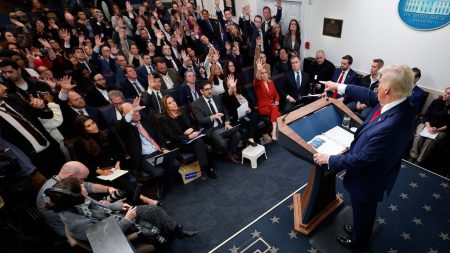
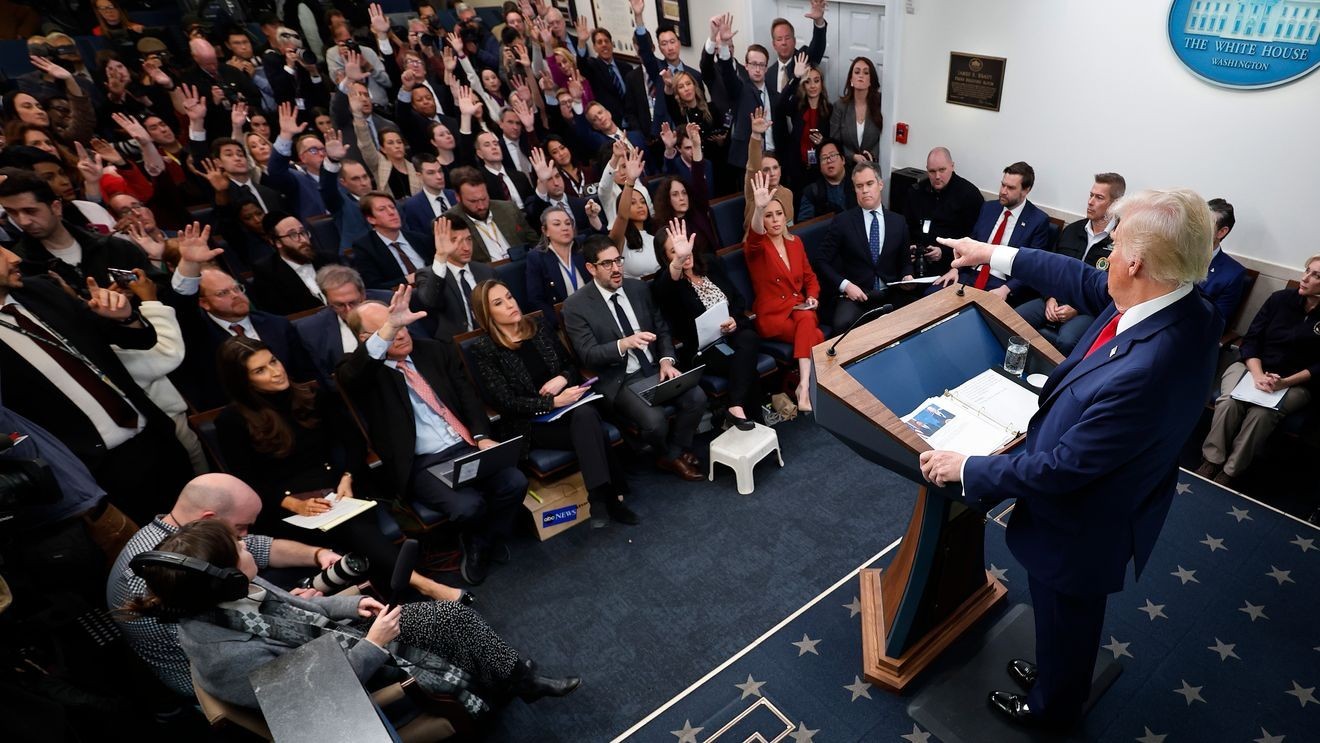
The survey also found widespread concern that press freedom has declined during President Donald Trump’s second administration. More than four in ten Americans told Pew that the press has become less free under Trump. That belief is heavily polarized: only 15% of Republicans say the press has become less free, while 72% of Democrats say it has. The partisan gap reflects Trump’s turbulent relationship with the news media. During his campaign and presidency, Trump has frequently criticized journalists, called unfavorable coverage dishonest, and labeled news organizations as enemies of the people. Loge said such rhetoric is dangerous for democracy. Too often, he argued, the president has characterized reporters as enemies simply because they report information he does not like. “That’s remarkably dangerous,” Loge said. “The president can say, ‘I disagree with this reporter, I don’t like that point of view.’ But they should always embrace a robust and open debate. Our democracy demands no less.” The findings suggest that perceptions of press freedom are shaped not only by legal realities but also by political messages and trust in institutions. Democrats may interpret Trump’s attacks as evidence of growing authoritarianism, while Republicans may see the media as biased and deserving of criticism. The result is a country with fundamentally different views about whether the press is under threat or is itself a threat. Loge’s comments underscore a traditional democratic ideal: that public officials should accept criticism and engage with the media, even when reporting is unfavorable. The White House’s relationship with the press has long been contentious, but Trump’s approach has intensified debates about the proper role of government in relation to journalism. The Pew data show that a large segment of the population worries about restrictions on press freedom, but there is no consensus about who is responsible or what should be done.
More broadly, the study reveals that Americans define press-freedom challenges differently based on their partisanship. Democrats tend to express anxiety about direct government restrictions, such as legal penalties against news outlets, government demands to remove stories, and official efforts to intimidate journalists. Republicans, by contrast, are more likely to emphasize problems of false information and the role of news organizations in controlling what people see. This divergence helps explain why the two parties reach different conclusions about censorship questions. For Democrats, government demands to take down stories are an alarming invasion of editorial independence. For Republicans, such demands may seem an acceptable response to a media landscape that distorts facts and pushes agendas. The Pew study found that 28% of Americans believe the media is completely free to report the news today, while 46% say they are extremely or very worried about potential restrictions on press freedom. Here too, partisanship matters: Democrats are more likely than Republicans to express concern over press restrictions. This is consistent with the finding that Democrats see the government as a greater menace to press freedom, while Republicans are more concerned about the conduct of news organizations themselves. The data also suggest that the media’s credibility is not universally accepted. About 80% of Americans say the government at least sometimes intentionally keeps important news from reaching the public, and a similar percentage says news organizations at least sometimes deliberately withhold important news. That symmetry is striking: Americans are nearly as suspicious of the press as they are of the government. It points to a broad sense that the public is not getting the full story, either from official sources or from journalists. The lack of trust in both institutions complicates any effort to build consensus around press freedom. If Americans believe both the state and the media are hiding the truth, they are unlikely to see any single solution as protecting their interests. Instead, public opinion appears fragmented among competing concerns: fear of government power, fear of media power, and fear of misinformation.
The study also tested attitudes toward specific government powers that would ordinarily be considered severe incursions into journalistic independence. Around 30% of Americans say it is at least sometimes acceptable for the government to force journalists to reveal the identities of unnamed government sources. A similar share says it is at least sometimes acceptable for the government to revoke a news organization’s license to broadcast. Both actions are strongly opposed by press advocates, who argue that source confidentiality is essential to investigative reporting and that licensing revocation amounts to a prior restraint on speech. The fact that roughly one in three Americans would condone such measures reflects a willingness to accept significant government authority over news gathering and publishing. It also highlights the difficulty of drawing clean lines between legitimate regulation and censorship. Forcing a reporter to expose a confidential source can chill whistleblowing and undermine the press’s ability to uncover misconduct. Yet Americans concerned about leaks may see source disclosure as a necessary tool for accountability. Similarly, broadcasting licenses are already subject to federal regulation, but revoking a license because of a story crosses from technical oversight into content-based punishment. The Pew numbers show that public opinion is not simply libertarian on press issues; many people are comfortable with hands-on government involvement when they fear the consequences of unfettered journalism. At the same time, the overwhelming majority of Americans suspect that both the government and the media are hiding important news from them. That creates a paradox: the public distrusts both the government and the press, yet some are willing to grant the government power over the press. Political scientists and media scholars say this pattern is common in polarized environments, where people support restrictions on speech they dislike while demanding protections for speech they favor. The findings also raise questions about the future of press freedom as a shared democratic value. If sizeable minorities accept forced source disclosure and license revocation, the legal and political defenses of press freedom may be weaker than commonly assumed.
Loge said freedom of the press remains vital to American democracy, even when journalists exercise restraint for the greater good. He argued that a healthy society depends on an open exchange of perspectives. “Democracy is an ongoing debate about what to do next,” Loge said. “You can only have an honest debate if you have all perspectives and all perspectives are represented.” That principle, he said, is why the government should not dictate what journalists can report. Journalists may make mistakes; they may publish information that is incomplete or even false. But the remedy for bad speech in a democratic society is more speech, not state suppression. The Pew-Knight Initiative study shows that the American public holds a more complicated view. Many people are wary of both government secrecy and media bias. They support the abstract idea of a free press but are willing to support specific government actions that would limit press freedom in practice. The findings suggest that protecting press freedom requires more than legal guarantees; it requires public understanding of why editorial independence matters. It also requires a press that earns trust through accuracy, fairness, and transparency. For Loge, the threat of government policing of journalism is far worse than the imperfections of the media. Americans may not always like what journalists report, and they may question the motives behind coverage. But the answer to unfavorable news is not to give public officials the power to suppress it. In a democracy, the press serves as a check on power by informing citizens and facilitating debate. If that check is weakened by censorship, the public loses the information necessary to make meaningful decisions. The Pew study’s findings do not offer a simple answer to the tension between press freedom and national security or misinformation. Instead, they reveal a public that is still wrestling with these questions, guided by rival concerns about government overreach, media credibility, and the need for honest information. Loge’s final point is clear: even those who dislike the media should defend its independence, because a society without a free press cannot sustain a genuine democracy.