


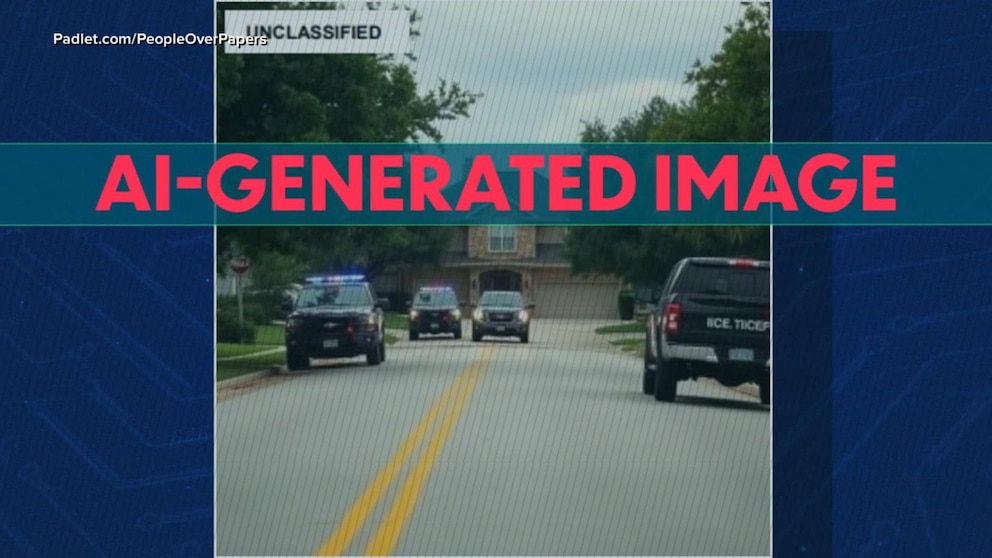
AI-Generated Misinformation Fuels Immigration Debate: Deepfakes and Doctored Videos Spread False Narratives
The digital landscape of the immigration debate is increasingly being polluted by sophisticated AI-generated misinformation, raising serious concerns about the impact on public discourse and policy decisions. Deepfake technology, capable of creating realistic yet entirely fabricated videos, is being deployed to spread false narratives about immigration enforcement, depicting events that never occurred and putting words into the mouths of public figures. These manipulated videos, often indistinguishable from authentic footage to the untrained eye, are readily shared across social media platforms, rapidly disseminating misleading information and potentially influencing public opinion on a highly sensitive and complex issue. The emergence of this technology presents a significant challenge to journalistic integrity and fact-checking efforts, demanding enhanced vigilance and the development of more robust detection methods.
The spread of AI-generated misinformation is not limited to deepfakes. Doctored videos, where existing footage is manipulated or selectively edited to create a false impression, are also contributing to the proliferation of misleading narratives. These videos might feature genuine footage of immigration enforcement activities, but through carefully chosen clips and deceptive editing, they can be presented in a way that completely distorts the reality of the situation. For example, a video might show a single instance of force used by border patrol agents, while omitting the context or the events leading up to the incident, creating a false narrative of systemic brutality. This type of manipulation can be even more insidious than deepfakes, as it relies on real footage, making it harder to identify and debunk.
The consequences of this misinformation campaign are far-reaching and potentially devastating. By distorting the public’s perception of immigration enforcement, these fabricated videos can erode trust in government institutions and fuel harmful stereotypes about immigrant communities. They can also exacerbate existing divisions within society, inflaming tensions and hindering productive dialogue on immigration reform. Furthermore, by presenting a manipulated reality, these videos can influence policy decisions, leading to the implementation of measures based on falsehoods rather than facts. The rise of AI-generated misinformation poses a significant threat to the integrity of the democratic process, as it undermines the very foundation of informed public discourse.
Addressing the challenge of AI-generated misinformation requires a multi-pronged approach involving technological advancements, media literacy initiatives, and platform accountability. Developing sophisticated detection tools that can identify manipulated videos is crucial. Researchers are working on algorithms and software that can analyze video footage for inconsistencies, digital artifacts, and other telltale signs of manipulation. However, this is an ongoing arms race, as the technology used to create deepfakes and doctored videos is constantly evolving. Simultaneously, promoting media literacy among the public is essential. Individuals need to be equipped with the critical thinking skills to evaluate the authenticity of online content and identify potential signs of manipulation. This includes understanding the capabilities of AI-generated media and being aware of the potential for malicious actors to exploit this technology.
Social media platforms also bear a significant responsibility in curbing the spread of misinformation. They need to implement more robust content moderation policies and invest in automated systems that can flag and remove manipulated videos. Furthermore, platforms should prioritize transparency and provide users with clear information about the origin and authenticity of the content they encounter. This could involve labeling AI-generated content or providing tools that allow users to verify the source of videos. Holding platforms accountable for the content they host is crucial to preventing the widespread dissemination of misinformation.
The fight against AI-generated misinformation is a critical battle for the future of informed public discourse and democratic decision-making. As the technology continues to advance, the challenge will only become more complex. A collaborative effort involving researchers, journalists, policymakers, and the public is essential to combat this emerging threat and ensure that accurate information prevails over manipulated narratives. Failure to address this issue effectively could have profound consequences for society, eroding trust in institutions, exacerbating social divisions, and ultimately undermining the integrity of democratic processes. The need for vigilance, critical thinking, and coordinated action has never been greater.