




Oxford Dispute Erupts Over Kratom Labeling, Synthetic Opioids After Ole Miss Student Deaths
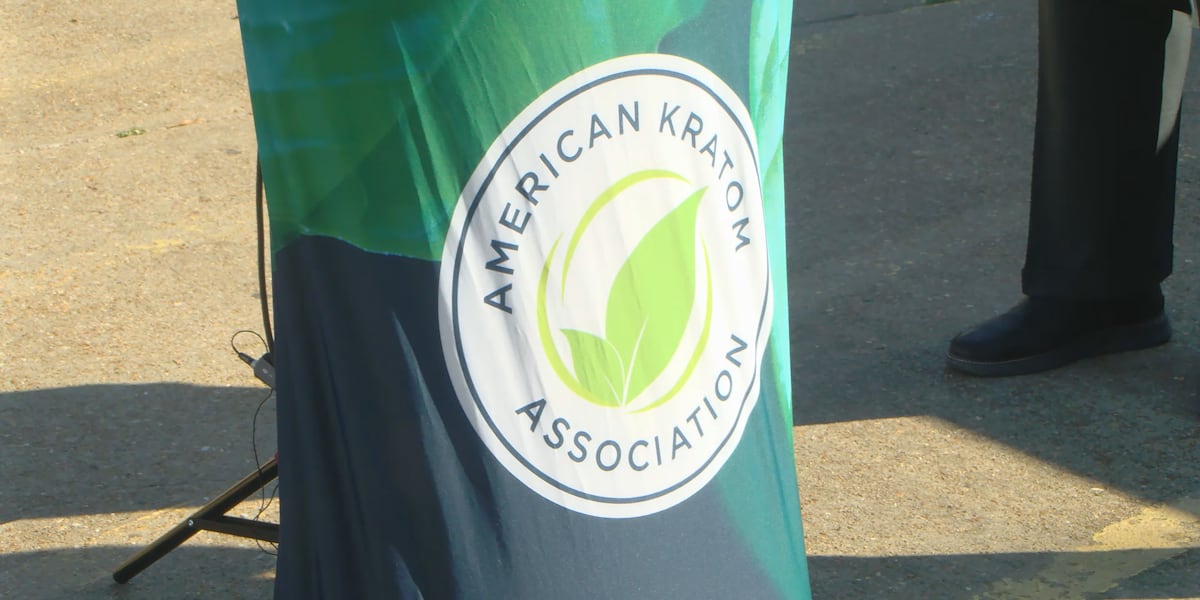
OXFORD, Miss. — A battle over facts, public warnings, and emerging synthetic opioids is intensifying in Oxford following the tragic deaths of two University of Mississippi students, with advocates, law enforcement, and grieving families all demanding answers. The American Kratom Association held a press conference Wednesday morning to address recent law enforcement raids that advocates say did not uncover natural kratom, criticizing what they claim is the misidentification of the product “Smax” as kratom. The association called out local law enforcement and demanded investigators correct the record regarding what substances were found at the scenes of both death investigations. During the briefing, natural kratom consumers spoke about their personal experiences with the plant, while speakers emphasized the distinction between natural kratom and synthetic alternatives—warning that synthetic products are addictive and act as opioids. The press conference came at a moment of heightened scrutiny after two young men died and police raided vape shops in Lafayette County and beyond, seizing products that authorities initially described as kratom but that advocates insist are something far more dangerous and chemically distinct. The association’s presence in Oxford was unusual, signaling that this local tragedy has become a flashpoint in a national debate over how botanical substances and their synthetic analogs should be regulated, labeled, and discussed in public safety warnings.
The deaths of Aidan Hamilton, 18, and Robert Strang, 20, both University of Mississippi students, have become the center of a widening investigation into illegal drug sales. Wednesday’s briefing followed recent raids in Lafayette County, including a search warrant executed at Puffs Vape, Tobacco and Beer Store on Heritage Drive in Oxford. The Lafayette County Metro Narcotics Unit said police located more than 500 units of kratom, plus THC cartridges, gummies and other suspected narcotics. Kratom is currently banned in the City of Oxford and Lafayette County. Two men, 51-year-old Yahya Mohamed Mosleh and 18-year-old Islam Mohamed, were arrested and charged with three counts each of possession of Schedule I controlled substances with intent to distribute. According to court affidavits, that raid stemmed from the suspected overdose deaths of Hamilton and Strang. Shortly after their deaths, the Lafayette County Metro Narcotics Unit issued a public safety warning stating that packaged kratom was discovered at both death scenes. However, court documents later revealed both had purchased “Smax” Pseudo-DHM tablets. Hamilton purchased Smax at Puffs twice before his death, while Strang made purchases at a store in Yalobusha County. The distinction between those purchases and natural kratom is now at the heart of the controversy, as investigators continue to determine exactly what substances contributed to the students’ deaths and whether the initial public alert was misleading.
Advocates with the American Kratom Association argue that synthetic or adulterated products like “Smax” are distinct from natural kratom and are improperly being conflated by the public and investigators, particularly as authorities across the Mid-South ramp up enforcement. “The police chief and the sheriff absolutely misled everybody when they issued an investigative report that was incomplete and called it a ‘kratom package product’ when it was not,” said Mac Haddow, Senior Fellow on Public Policy for the American Kratom Association. “We need to correct that record… Let’s find out what really killed these kids, and it may not be that product either.” Haddow argued that pairing natural leaf kratom with chemically engineered substances sparked widespread panic and an unfair crusade against a product that millions of Americans use safely. “[Smax] is a synthetically engineered opioid, not kratom at all, and they shouldn’t have said it was,” said Haddow. “But that’s what sparked this crusade against kratom, and the media was misled.” The distinction matters not only for legal enforcement but also for public health, as natural kratom advocates say they fear a blanket ban could remove access to a botanical that has helped many people manage chronic pain without prescription opioids. Kratom, a tropical tree leaf native to Southeast Asia, has been used for centuries for its stimulant and pain-relieving properties, but synthetic compounds like those found in Smax are laboratory-created and far more potent, raising the stakes for regulators and users alike.
Natural kratom users shared their personal stories at the press conference, offering a human face to the controversy. Haddow brought several women from across Mississippi and Tennessee to speak on the steps of the sheriff’s building Wednesday about how natural botanical kratom has helped them manage debilitating pain. Among them was Jennifer Gillis, who drove in from Tennessee. Gillis was diagnosed with transverse myelitis after waking up paralyzed from the neck down two decades ago. Gillis said she turned to natural kratom in 2019 after federal prescription opioid guidelines tightened, leaving chronic pain patients with few options. “I struggled for many years until a friend of mine mentioned kratom, and I tried it, and it gave me my life back. I was able to get out of bed, run errands, just do something normal people take for granted,” said Gillis. Gillis, a mother of three whose son is currently a junior in college, shared her deepest condolences with the families of Hamilton and Strang. She urged the public and lawmakers to understand the critical distinction between natural leaf kratom and synthetic drugs. “Natural kratom products are a completely different breed than any of the tablets that are synthesized and made in a lab,” said Gillis. “Just all across America, go wipe all that synthetic stuff off the shelf.” Her testimony echoed the broader message from the association: that natural kratom users should not be punished for the dangers posed by synthetic imitations, and that accurate information is essential for both public safety and personal health decisions.
Law enforcement, however, is defending its actions. Wednesday afternoon, the Lafayette County Metro Narcotics Unit issued a lengthy response defending their initial alert as a proactive measure to keep the community safe. Law enforcement officials stated that packaging associated with kratom-related products was indeed found at both locations, prompting them to alert the public “out of an abundance of caution.” “That warning was not a declaration that kratom or any specific substance caused either death,” read the press release. “It was a proactive effort to inform the public of a potential danger while investigators worked to determine the facts.” In their statement, law enforcement also pointed to the U.S. Drug Enforcement Administration’s temporary placement of three synthetic opioid compounds—including mitragynine pseudoindoxyl, MGM-15, and MGM-16—into federal Schedule I status, calling directly on the Mississippi Legislature to take immediate action. “Mississippi cannot afford to allow dangerous synthetic substances to outpace the laws designed to protect our citizens,” wrote the agency. “We are calling on the Mississippi Legislature to address synthetic kratom-related products with the urgency this public safety issue demands.” The agency’s response underscored the difficult position of local investigators, who must balance the need for rapid public warnings with the risk of inaccurate or incomplete information, especially in a case where toxicology results have not yet provided definitive answers.
Where things stand now, official causes of death for Hamilton and Strang remain pending toxicology results. The storefront at Puffs was closed Wednesday, with a handwritten sticky note posted to the front door reading “closed perm.” Metro Narcotics said its retail investigation remains active and additional arrests could follow. In neighboring Tipton County, Tennessee, sheriff’s deputies seized more than 4,700 suspected kratom pills across five businesses this week following an unresponsive-person call. Kratom was made illegal in Tennessee this summer. The unfolding situation in Oxford reflects a broader national debate over how to regulate botanical substances and synthetic analogs, as well as the need for accurate public warnings in the midst of a devastating overdose crisis. For now, the families of Aidan Hamilton and Robert Strang wait for toxicology results, while law enforcement and advocates continue to clash over what really happened—and what should be done to prevent another tragedy. The case has also highlighted the growing challenge posed by synthetic opioids that are not easily classified under existing drug laws, leaving communities and policymakers scrambling to catch up with a rapidly changing illegal drug market. As the investigation continues, both sides are calling for transparency, but they remain sharply divided over the language used to describe the substances involved and the appropriate legal response to a crisis that has already claimed two young lives.