








Letters to the Editor Reflect Deep Regional Concerns on Forest Policy, Vaccine Mandates, and the Clock
Residents draw on local history to caution against deregulation, misinformation, and a time change that favors leisure over labor.
The Post and Courier’s letters section has once again become a vibrant sounding board for national policy debates filtered through the lens of Lowcountry experience. In a striking collection of submissions, readers have taken aim at three significant federal and legislative actions currently shaping American life: the “Fix Our Forests Act,” the Trump administration’s overhaul of vaccine guidance, and the perennial push for permanent Daylight Saving Time. While the topics are diverse, the underlying sentiment is unified—a palpable anxiety over the erosion of long-standing environmental protections, the politicization of public health, and the prioritization of commercial interests over the safety and well-being of ordinary citizens. Drawing on historical memory, scientific consensus, and economic reasoning, the letter writers present a compelling case for cautious governance, urging elected officials and the public to look before they leap into policies that could have profound, unintended consequences.
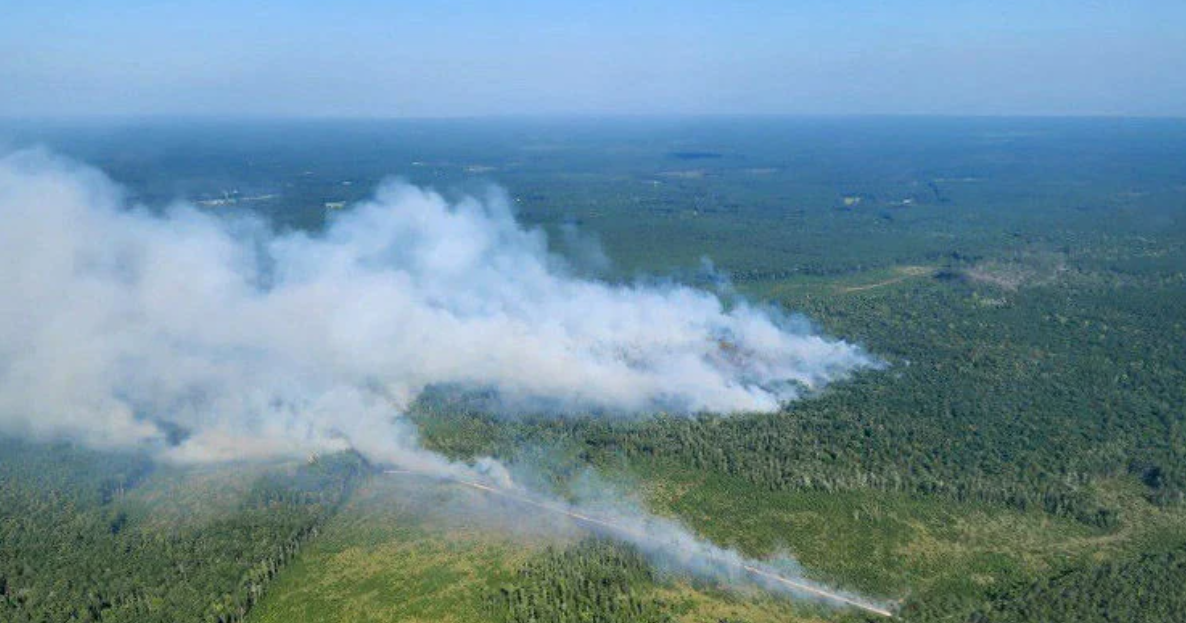
The first and most detailed criticism comes from Lawrence E. Moore Jr. of Folly Beach, who writes passionately against the so-called “Fix Our Forests Act” (S.1162). Moore describes the legislation as a deceptive bill that uses the specter of wildfire as a smokescreen to dismantle environmental safeguards for the benefit of the corporate logging industry. He directly appeals to members of Congress to vote against the measure, arguing that it would “silence and limit public comment and legal oversight” and would allow massive 10,000-acre logging projects to proceed without any environmental review. Most significantly, Moore warns that the bill would effectively gut the Endangered Species Act, stripping vital protections from imperiled wildlife and plant species. His opposition is not abstract; it is rooted in vivid personal memory. Growing up in South Carolina during the 1940s and 1950s, Moore witnessed firsthand the ecological devastation wrought by unchecked corporate logging. He recalls “barren landscapes left by corporate loggers” and the way that exposed topsoil eroded and muddied the blackwater rivers and streams that are the lifeblood of the Lowcountry. For Moore, the proposed act represents a dangerous regression to an era before the Clean Air, Clean Water, and Endangered Species Acts of the 1960s, legislation that he credits with creating the “beautiful and livable environment” he now enjoys with his grandchildren. He cautions against trusting the bill’s stated purpose of reducing fire danger, pointing out that recent science shows that clear-cutting often promotes the rapid growth of highly flammable invasive grasses, which can paradoxically “increase the hazard of fast fires,” as evidenced by the devastating 2021 Marshall Fire in Colorado, which destroyed over 1,000 homes in an area that had been managed for fuels.
Moore’s letter taps into a broader national debate about federal land management. Proponents of the Fix Our Forests Act argue that excessive litigation and bureaucratic delays prevent essential forest thinning, which they claim is necessary to prevent catastrophic megafires. They contend that categorical exclusions for large-scale projects are needed to speed up the work and make forests more resilient. However, Moore and a coalition of environmental groups counter that this framing is a pretext for resource extraction. They point out that a 10,000-acre categorical exclusion is enormous, effectively removing any meaningful check on logging operations. The historical context Moore provides is crucial; the environmental laws of the 1960s were enacted precisely because of the kind of industrial-scale exploitation that left the South Carolina landscape scarred for decades. Public comment periods and NEPA (National Environmental Policy Act) reviews are not just bureaucratic hurdles; they are the primary mechanisms for citizens to hold industry and government accountable. By eliminating these, Moore argues, Congress would hand the keys to the forest over to the timber lobby, inviting a return to the aggressive clear-cutting that stripped the region’s hillsides and poisoned its waterways. The letter serves as a stark reminder that the “fix” proposed in Washington may create problems far worse than the ones it claims to solve.
The second letter shifts the focus from the forests to the nation’s clinics, addressing the controversial appointment of Robert F. Kennedy Jr. as Secretary of the U.S. Department of Health and Human Services (HHS). Ellis Kahn of Charleston expresses alarm at Kennedy’s nomination, given his well-documented skepticism towards life-saving vaccines. Kahn’s letter details a progression of concern, beginning with the “upsetting” nature of the appointment and escalating to “outrageous” when President Donald Trump issued an executive order urging fewer childhood vaccinations. Specifically, the order encourages the splitting of the combined measles, mumps, and rubella (MMR) vaccine into separate single-dose injections, administered over a longer period. Kahn argues that this is a direct attack on established medical consensus. The staggered schedule is not only unsupported by science but is also logistically problematic. The standard combined vaccine is a triumph of preventative medicine, reducing the number of needle sticks a child must endure and ensuring they are protected against three serious diseases simultaneously. By separating them, Kahn notes, the government is mandating more doctor visits, which translates directly to higher costs and a greater likelihood that parents will miss a dose. “Experience tells us some children will miss the shots, plus more visits equal more parental expense,” he writes, predicting that this will lead to plummeting vaccination rates.
Kahn’s letter becomes more urgent as he connects the new federal policy to recent outbreaks. He points to President Trump’s public remarks, made during a press conference, where he suggested a link between vaccines and autism—a theory that has been thoroughly debunked by massive, long-term studies involving millions of children. Kahn fears that such rhetoric from the highest office in the land “reinforces the negative actions or inactions of those already skeptical because of earlier persuasive misinformation.” He specifically cites a “recent resurgence of measles in Spartanburg” as a dire warning of what is to come. The measles virus is incredibly contagious; a single case can infect up to 90% of unvaccinated close contacts. Before the vaccine, measles claimed hundreds of lives annually in the U.S. and caused severe complications like pneumonia and encephalitis. The reappearance of measles in South Carolina and across the nation is a direct result of falling vaccination rates driven by misinformation. Kahn concludes by expressing hope that “knowledgeable physicians and their well-respected organizations” will protest loudly against these changes, urging them to spread accurate information to counter the “dangerous rhetoric” emanating from the administration. He calls on all responsible citizens to “contradict and call out this harmful executive directive,” emphasizing that “precious lives are at stake” and that “silence and inaction are not a satisfactory option.”
The third and final letter takes a break from existential threats to public health and environmental policy, tackling the less severe but highly relatable issue of Daylight Saving Time. Jerry Smith of Charleston responds to a recent Post and Courier article which noted that if the state permanently adopted Daylight Saving Time, winter sunrises would shift to as late as 9:00 a.m. Smith finds it telling that the coverage highlighted support for the change from the golf industry, which benefits from longer evening hours. He argues that this commercial enthusiasm should be weighed against the impact on the broader public. “I suspect the vast majority of Americans continue to view golf as an activity limited to the more economically affluent, representing a small slice of the American public,” Smith writes. He contrasts the golfers’ leisure with the plight of “all schoolchildren and most working Americans,” who would be forced to commute and wait for buses in the pitch-dark mornings. Smith questions the original rationale for DST—energy conservation—noting that modern studies have consistently shown the savings to be negligible or non-existent, meaning the rationale is now “lacking in credibility.” He advocates for a simple return to permanent Standard Time, arguing that the alignment of daylight with morning commutes is essential for safety. “The emphasis on safety rather than pleasure wins hands down,” he declares, suggesting that while evening golf might be profitable, it is not worth endangering children walking to school or workers driving before dawn.
The array of letters in this week’s edition illustrates the widening rift between federal policy priorities and public interest concerns. On the one hand, the Fix Our Forests Act and the vaccination executive order represent a push for deregulation and deference to individual choice, often framed as a battle against government overreach. On the other hand, Mr. Moore, Mr. Kahn, and Mr. Smith represent a constituency that remembers the societal benefits of strong federal oversight—whether it is clean rivers, disease eradication, or safe infrastructure. Their arguments are grounded in empirical history and scientific evidence rather than ideological assertion. As the news cycle moves on, the Post and Courier invites further input from its readers. Letters to the editor are limited to 250 words and must be submitted via email to letters@postandcourier.com, including the writer’s name, city of residence, and a daytime telephone number for verification, along with a brief headline. The editorial staff reserves the right to edit submissions for clarity, tone, and libel. As these three messages make clear, the pen remains a powerful tool for advocating for a world that prioritizes the common good over corporate profits and political convenience, and the public is encouraged to join the conversation.


