



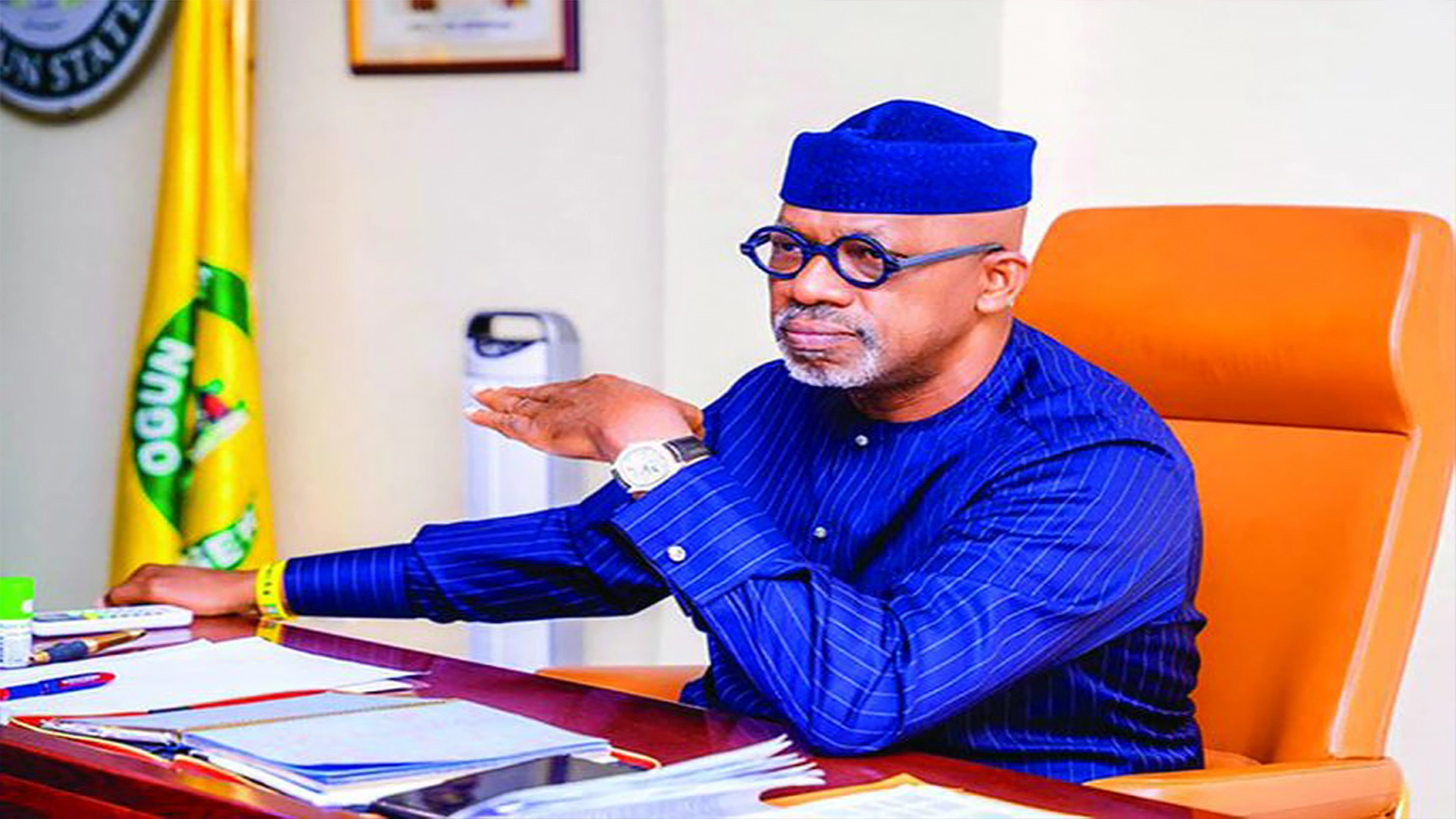
Ikenne, Ogun State – Governor Prince Dapo Abiodun of Ogun State has issued a powerful call for the Church to step into the vanguard of Nigeria’s democratic renewal, urging Christian leaders to use their immense moral authority to confront vote-buying, electoral violence, intimidation, and misinformation as the nation begins to look toward the 2027 general elections. Speaking on Wednesday at the 15th General Synod of the Church of Nigeria, Anglican Communion, held at Our Saviour’s Anglican Church in Ikenne, the Governor insisted that the Church cannot afford to remain a passive observer in the political process at a time when the credibility and peaceful conduct of elections are under severe threat. He told clergy, bishops, and lay leaders that the Church’s influence in shaping values, attitudes, and behaviour across communities places it in a unique position to educate the faithful on responsible civic participation and to mobilise collective resistance against practices that undermine democracy. Abiodun’s message was unambiguous: the Church must be a frontline actor in protecting the electoral process, not merely from the pulpit in general terms, but through deliberate teaching, pastoral engagement, and community action that reaches every level of society. He stressed that political participation should be anchored on ideas, vision, and programmes rather than on ethnicity, religion, or other divisive considerations, warning that the coming electoral cycle will test the nation’s resolve to conduct free, fair, and peaceful elections.
The Governor articulated a comprehensive vision of the Church’s role, saying that religious institutions must help prepare Nigerians for elections by encouraging responsible citizenship, rejecting vote-buying and violence, and ensuring that misinformation does not become a tool for dividing the people. “The Church has a critical role to play in preparing our people for the elections by encouraging responsible citizenship, rejecting vote-buying and violence, and ensuring that misinformation does not become a tool for dividing our people,” Abiodun said. He went further to express deep concern over the vulnerability of young people to violence, crime, substance abuse, fraud, and extremism, urging the Church to strengthen its moral and social guidance for the younger generation. He called on young Nigerians to redirect their talents, creativity, and energy into productive ventures that would improve their lives and contribute to national development. The Governor also made a broader appeal for stronger collaboration between government, religious institutions, traditional rulers, the private sector, and civil society, emphasising that building a peaceful and prosperous society is a collective responsibility that no single institution can bear alone. In doing so, he framed the Church not as a peripheral moral voice but as an essential partner in governance and national development, one that must actively engage with the pressing social, economic, and political challenges of the day.
Turning to the theme of the Synod, “The Priesthood of All Believers: Equipping God’s People for the Work of Ministry,” Abiodun described the theme as apt and timely, noting that the gathering offered an important opportunity for prayer, reflection, discernment, and renewed commitment to the teachings of Christ. He said the Synod would enable the Church to reflect on its journey, confront contemporary challenges, and chart a purposeful course for the future, while urging the Church to sustain its historic contributions to education, healthcare, moral instruction, and community development. Describing the Church as an important voice of conscience in society, the Governor recalled that the Anglican Church in Nigeria had historically expressed its calling through the spread of the gospel, the nurturing of believers, service to humanity, the pursuit of justice, peace, and reconciliation, and the protection of God’s creation. He also offered a broader philosophy of development, insisting that progress should not be measured solely by the number of roads constructed, investments attracted, or buildings commissioned, but also by lives transformed, families strengthened, and opportunities created. That statement carried particular weight coming from a governor whose administration has championed major infrastructure projects, suggesting that he understands that true governance goes beyond physical development and must include moral and social renewal. Abiodun urged the Church to remain faithful to Scripture while addressing pressing social challenges, including poverty, insecurity, the plight of vulnerable people, and the protection of children, and expressed confidence that the Synod would produce practical outcomes capable of strengthening the Church and contributing to national renewal.
In his welcome address, the Bishop of Remo and Archbishop of Lagos Ecclesiastical Province, The Most Rev. Dr. Michael Olusina Fape, called on Christians to recognise that they had been called out of darkness into light and should therefore emulate Christ as the perfect example of a godly life. Acknowledging the numerous internal and external challenges confronting Christians in the modern world, Fape urged believers to equip themselves with the sound word of God so that they might remain steadfast in the faith and overcome their challenges. He used the occasion to highlight the remarkable growth of the Diocese of Remo, disclosing that it had expanded from two archdeaconries, ten priests, and thirty-one churches at its inauguration on March 5, 1984, to twenty-one archdeaconries, one chapelry, thirty-three priests, and forty-eight churches today. That growth, he said, was a testament to the faithfulness of God and the commitment of generations of church leaders and members. Fape also expressed appreciation to past church officials and to the sons and daughters of the Remo Diocese who have contributed to the growth of the Church, making special mention of the late Chief Obafemi Awolowo and Governor Dapo Abiodun. The Synod, hosted by the Diocese of Remo, is presided over by the Primate of the Church of Nigeria, Anglican Communion, His Grace, The Most Rev. Henry Ndukuba, bringing together bishops, clergy, and laity from across the country for days of worship, deliberation, and fellowship.
Meanwhile, on the eve of the Synod, Governor Abiodun reaffirmed his commitment to integrity, selfless service, and education, saying that the values instilled in him by his parents remained central to his approach to public service. He made these remarks at the dedication of the Emmanuel and Victoria Abiodun Hall, built in honour of his late father, Dr. Emmanuel Adesanya Abiodun, and his mother, Chief Mrs. Victoria Abiodun, at St. James’ Anglican Church, Iperu, in Ikenne Local Government Area. The Governor described the dedication as a sacred meeting point of memory, gratitude, faith, and family, as well as a reflection of one generation’s labour and the responsibility of the next to preserve and build upon its legacy. He recalled that his parents taught him and his siblings that the greatest inheritance was not material wealth but humility, character, knowledge, compassion, discipline, and the fear of God. According to Abiodun, his parents belonged to a generation that regarded a good name as more precious than gold and education as an instrument of liberation and service to humanity. Those lessons, he said, have continued to shape his conduct and outlook in public office, and he vowed to remain true to them for the rest of his life.
Governor Abiodun’s reflection on his parents was both personal and philosophical, offering rare insight into the moral foundation of his leadership. “I will continue to stand for integrity over convenience, service over self-interest, and education over ignorance. I will continue to choose compassion over indifference and unity over division,” he declared. He described his late father as a proud son of Iperu, a devoted Christian, an accomplished educationist, and a community leader, and noted that his parents, though different in temperament, were united in purpose: to serve God, educate the child, respect human dignity, work honestly, preserve the family, and leave the community better than they found it. “The values of my parents became part of the moral compass with which I have approached public service. My father taught me that public service is a trust, not a possession; that power is temporary, but the consequences of its use may endure for generations. My mother taught me that strength can be gentle, authority can be compassionate, and peace must never be mistaken for weakness,” he said. The Governor reiterated his commitment to serving the people of Ogun State until the end of his administration, promising to continue to uphold and demonstrate the values bequeathed to him by his parents. He said the hall would serve not merely as a physical structure but as a lasting reminder of the principles, faith, commitment to education, and dedication to community development that defined his parents’ lives.
The Primate of the Church of Nigeria, Anglican Communion, The Most Reverend Henry Ndukuba, used the occasion to shower praise on Governor Abiodun, describing him as a good administrator whose administration had provided infrastructure and touched lives across Ogun State. Ndukuba assured the Governor of the continued support of the Anglican Church for his administration, saying the Church was willing to work with the state government to advance good governance and fulfil its responsibilities to society. The Primate said the Church had observed developments across Ogun State, particularly in infrastructure, investment promotion, and the Governor’s attention to the welfare of the people and the younger generation. “As we travelled round, we have seen the great work you’re doing. You have allowed God to use you to open up Ogun State to be an alternative, a destination for investment and a place that people can come and feel at home. We have followed the things that God is using you to do, not only in infrastructural development, but also your care for people and touching lives, especially the young people. We admire you, we love you, we pray for you, and we assure you that we will continue to be there with you and for you. What you have done is a great gift. This is a big legacy, and even after you are no longer here, if Jesus tarries, this gift given to God will speak for you,” Ndukuba said. With those words, the Primate captured the essence of the two events: the Synod’s call for the Church to engage the world with courage and conviction, and the Governor’s personal testimony of faith, family, and service. Together, they underscored a shared vision of moral leadership, social transformation, and collective responsibility in the pursuit of a just, peaceful, and prosperous Nigeria. As the 2027 elections draw nearer, the message from Ikenne is clear: the Church must rise to its calling, and leaders must lead with integrity, for the nation’s future depends on the values its people choose to uphold.