




Paragraph 1: The Shocking Confluence of Fire and Censorship
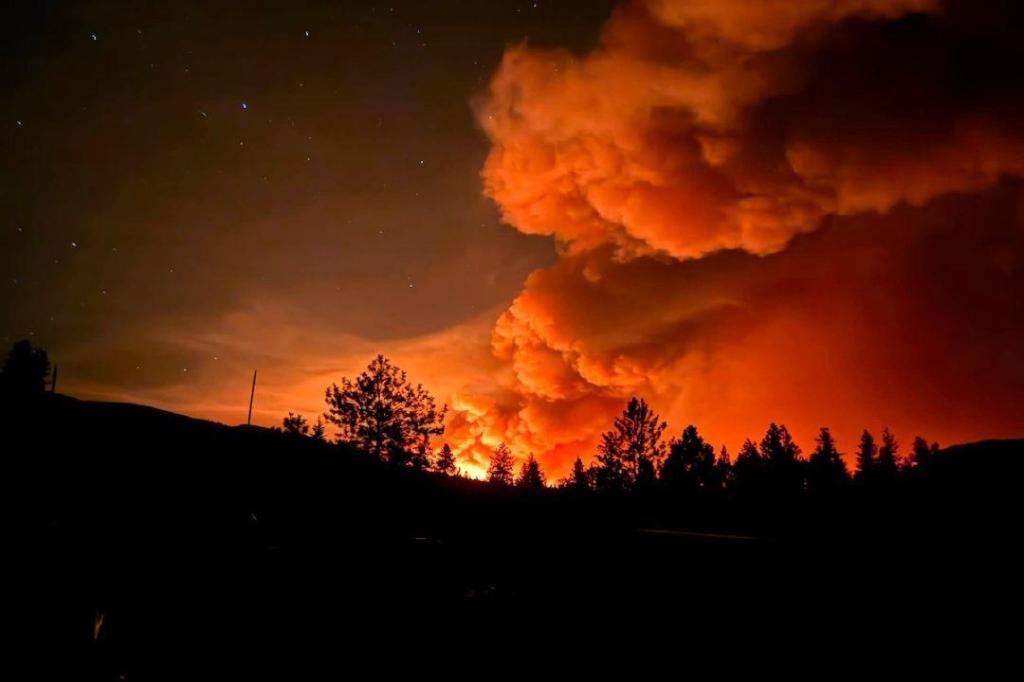
When the Bush Creek East wildfire tore through the Central Okanagan in the summer of 2023, forcing evacuations and raining embers upon Kelowna, the event sent shockwaves across Canada. For Blair Visscher, a Vernon resident watching the crisis unfold online, the shock was compounded by a disturbing phenomenon. As she scrolled through Facebook looking for critical, life-saving information, she was met not with official updates from authorities, but with a swirling vortex of divisive messages, conspiracy theories, and outright misinformation. This digital chaos was not a random occurrence. The emergency was bifurcated in a way that created a perfect storm for confusion: the fire ignited on July 12 and burned for months, but on Aug. 2, in the middle of the crisis, news articles about the blaze vanished from the platform. This exodus of credible journalism was a direct result of Meta’s decision to strip Canadian news from its Facebook and Instagram platforms in response to the federal Online News Act. The legislation aimed to compel the tech giants to pay for the journalism they profited from, but Meta’s retaliation was to remove the source of that value entirely, creating an information vacuum just when it was most dangerous.
Paragraph 2: A Master’s Thesis on an Information Vacuum
This chaotic confluence of events became the focus of Visscher’s master’s thesis at UBC Okanagan (UBCO). Her hypothesis was direct and compelling: the Meta news ban created an information void that allowed conspiracy narratives to flourish, filling the space where vetted, factual reporting had once provided context and guidance. Working with her supervisor, environmental humanities professor Greg Garrard, Visscher set out to track the growth of these narratives and understand why they gained so much more traction than official information. She realized that understanding the algorithmic pressures of Facebook, which few users consciously consider, was essential to her research. The Meta news ban, she discovered, had only exacerbated a distrust in government and experts that had been festering since the COVID-19 pandemic. The period of pandemic-related misinformation had broken public trust, and little had been done to repair it, leaving the public vulnerable to a new wave of falsehoods when the next crisis struck. For her thesis, Visscher studied three distinct wildfire events—Fort McMurray (2016), White Rock Lake (2021), and Bush Creek East (2023)—which together formed an instructive timeline demonstrating how social media’s role in crisis communication had dramatically shifted.
Paragraph 3: The Algorithm’s Role in Eroding Trust
Visscher’s research uncovered a stark evolution in the public’s relationship with official information. During the Fort McMurray fire, which predated the pandemic, there was a high level of public trust in official sources. However, by the time of the White Rock Lake fire, which occurred during the pandemic, the landscape had changed. She found that about four per cent of the Facebook discussion was made up of conspiratorial narratives, mixed with significant distrust and anger. Crucially, she determined that much of this anger did not stem directly from COVID-19, but from the mechanics of Facebook’s content algorithm. The algorithm failed to promote official information to users, so when people looked for it, it simply wasn’t there. This created a perception that if information was absent from Facebook, it didn’t exist at all. Visscher emphasizes that Facebook is not a neutral platform. Its algorithms are designed to boost content that generates anger and division because those emotions keep users engaged for longer periods, driving up ad revenue. This inherently disadvantages the dry, factual press releases from official sources, while amplifying sensationalist and fear-based conspiracy theories.
Paragraph 4: The Alarming Rise of Conspiratorial Content
The problem is worsening over time. When Visscher analyzed the 2023 Bush Creek East fire, the percentage of conspiracy theory content on Facebook had skyrocketed to 16.6 per cent of the discussion—a fourfold increase from the 2021 event. She attributes this surge directly to the news ban, which created a void that was quickly filled with low-quality, highly engaging misinformation. In the current wildfire season, she observes an abundance of questions about how fires are fought, evacuation decisions, and fire origins. While she believes these questions often arise from a genuine place of concern and a real desire for understanding, the problem lies in the answers people are led to. The platforms’ “deranged” algorithmic boosting pushes theories that are devoid of facts and detached from reality, leading people down a rabbit hole of falsehoods. The conclusions offered by these echo chambers are plausible-sounding but factually baseless, preying on people’s real anxieties to offer a simplified, if dangerous, explanation for terrifying events.
Paragraph 5: Recommendations for Officials and Journalists
Visscher holds little hope that Meta will voluntarily change its course to be more conscientious about its algorithms, but she points to several actions that can be taken by others to combat the misinformation. She commends the BC Wildfire Service for creating educational and engaging videos, but notes that their reach is limited by the same algorithms that bury official information. Her primary recommendation is for officials to adapt their communication style to the platform’s reality: make legitimate information more engaging. This means leaving behind the traditional, staid language of emergency management and adopting emotionally resonant language that connects with people on a human level before offering the hard facts. Such content is more likely to be promoted by the algorithm. She also calls on journalists to prioritize human-centered stories during wildfire events, arguing that stories of evacuees and community members can help people process grief and feel a sense of shared experience, making them less susceptible to divisive narratives. By uplifting community stories, journalists can offer a powerful counter-narrative to the dystopian and fear-based content that dominates social feeds.
Paragraph 6: A Shared Goal and a Simple Plea
Ultimately, Visscher frames the fight against misinformation as a battle to help people cope with the frightening reality of climate change, which is driving more frequent and severe wildfires. She notes that many conspiracy narratives are an attempt to push back against the idea that climate change is the cause, as people struggle to accept its terrifying implications. Her advice for the public is simple and grounded in hope: we must remember that everyone is trying to make sense of scary events, and we all share the same goal of keeping our communities safe. She urges people to resist the frustration and aggression they see online, and to trust in the good faith of their neighbours. Her final piece of practical advice is a small but powerful antidote to the algorithmic age: “Maybe just turn Facebook off for a bit and check the municipal website instead.” By seeking out and supporting official, vetted sources of information, and by cultivating empathy for our fellow citizens, we can build the resilience needed to weather both the physical fires and the digital storms that follow them.